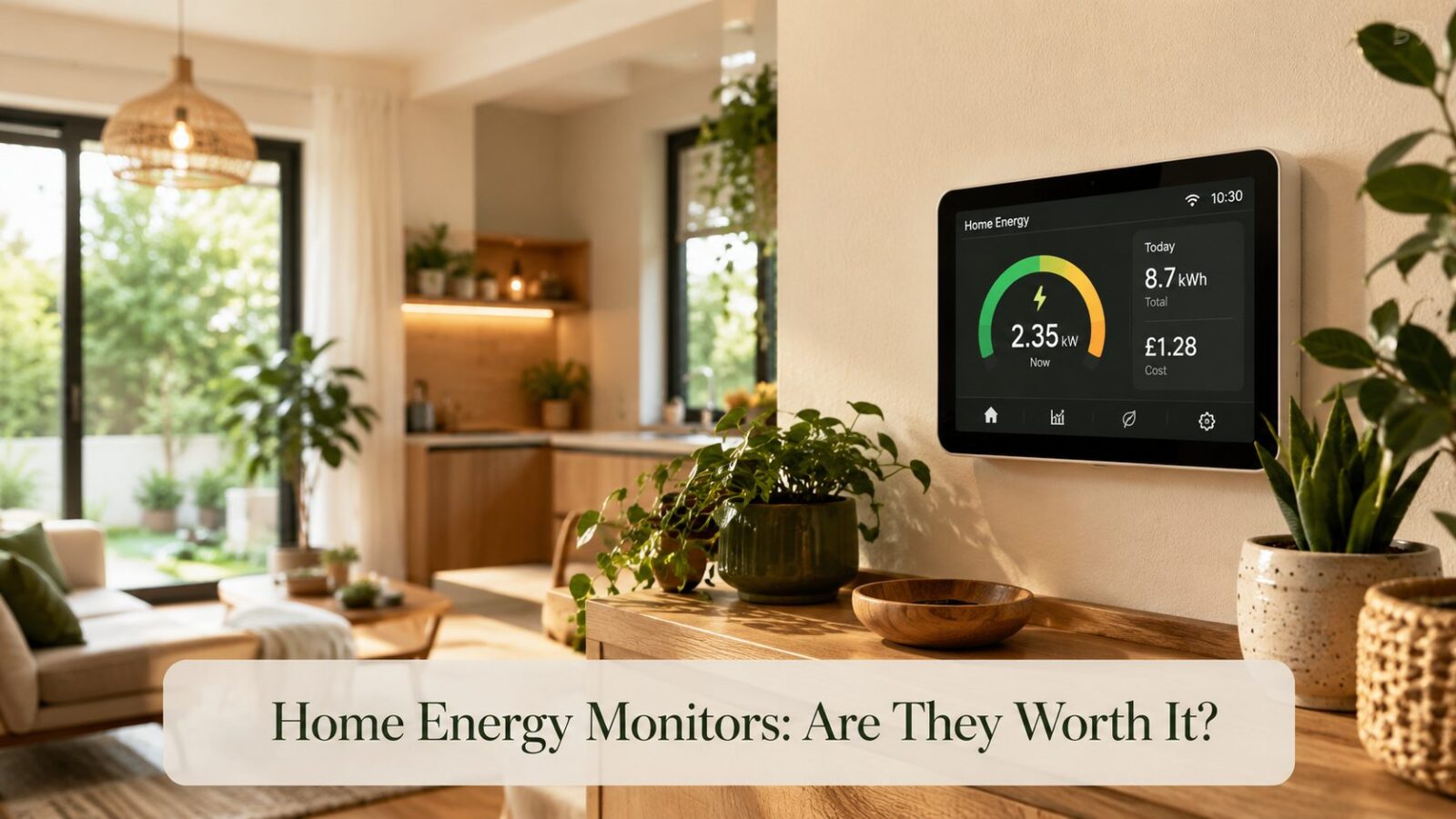
You cannot manage what you cannot see, and energy is almost invisible: it arrives as a single monthly number with no clue as to which appliance is responsible. A home energy monitor changes that, showing in real time and over the day where your power actually goes. For most homes, the first few weeks of insight reveal an obvious, fixable waster, an old fridge, a forgotten water heater, a thirsty cooling system, that pays for the monitor many times over. But the device only saves money if you act on what it shows. This guide explains how monitors work, what they reveal, and whether one suits you.
The honest framing is that an energy monitor does not save a single unit by itself. It is a diagnostic tool: its value lies entirely in the behaviour and decisions it prompts, which is why it works so well for people who genuinely want to cut their usage and act on data.
How energy monitors work
- Whole-home monitors: a sensor on the main supply shows total consumption live, and better models estimate which appliances are running.
- Plug-level monitors: a smart plug or sensor measures a single appliance precisely, ideal for pinning down a suspect device.
- App and display: both types show usage on your phone or a small display, with daily and historical breakdowns.
- Cost estimation: many translate usage into money using your rate, making waste tangible.
What a monitor reveals
The insights tend to surprise people. A monitor exposes the always-on baseline load that runs while you sleep, the appliances that cost far more than expected, and the true impact of habits like leaving the water heater on. Crucially, it lets you test changes: switch something off, watch the consumption fall, and see the effect immediately. That feedback turns the vague advice in our home energy guide into specific, verified action for your own home, and it is the surest way to find the standby waste described in our guide to cutting standby power.
Where a monitor fits among smart devices
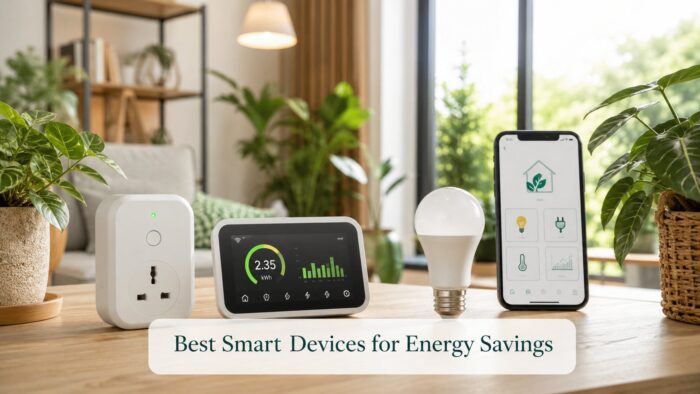
Among connected devices, an energy monitor is one of the few that earns its place purely on savings, which is why it ranks highly in our roundup of smart devices for energy savings. It works best paired with action: once it identifies your biggest user, you target it, often the cooling, where a smart AC controller then automates the fix. The monitor finds the problem; other tools and habits solve it.
When it is worth it, and when it is not
- Worth it if you have high usage and no idea what is driving it.
- Worth it if you enjoy data and will act on what you learn.
- Worth it if you suspect a specific appliance but want proof before replacing it.
- Less so if your usage is already low and well understood.
- Less so if you will look once and never change your habits.
Acting on what the monitor shows
The monitor only earns its keep when you turn its findings into action. A simple sequence converts insight into savings.
- Find the baseline: note the always-on load running overnight and hunt down what causes it.
- Identify the biggest user: usually cooling, the fridge, or water heating; confirm it with the data.
- Test a change: switch something off or adjust a setting and watch the consumption fall.
- Make it permanent: fix the habit, replace the appliance, or automate it, then verify the saving.
Common mistakes
- Buying a monitor, glancing at it once, and never acting on the data.
- Expecting the device itself to cut usage rather than the changes it prompts.
- Ignoring the always-on baseline load it reveals.
- Choosing a whole-home monitor when a cheap plug-level one would answer the question.
- Skipping the free changes the monitor clearly points to.
Editor’s note
An energy monitor is worth it for one simple reason: almost every home has a hidden waster the owner has wrongly guessed about, and the monitor ends the guessing in days. The catch is equally simple, it only pays back if you act. If you are the kind of person who, on seeing that the water heater or an old fridge is quietly draining money, will actually change the habit or replace the appliance, the device is among the best small purchases you can make. If you will look once and shrug, save your money and just do the free changes blind.
Frequently asked questions
Does a home energy monitor actually reduce my usage?
Not on its own. It reveals where your energy goes, but the savings come from the changes you make in response, switching off wasters, replacing inefficient appliances, shifting usage. For people who act on the data, it typically pays for itself quickly.
What is the difference between whole-home and plug-level monitors?
A whole-home monitor reads your total supply and gives an overall picture, sometimes estimating individual appliances, while a plug-level one measures a single device precisely. Use whole-home for the big picture and a plug monitor to pin down a specific suspect appliance.
Do I need an electrician to install one?
Plug-level monitors need no installation, you simply plug them in. Many whole-home monitors are best fitted by an electrician for safety, though some plug-in or app-based options need no wiring at all. Choose based on how much detail you want and how comfortable you are with installation.
Can an energy monitor track solar generation too?
Many can, and for a home with rooftop solar this is genuinely useful. A monitor that reads both consumption and generation shows how much of your solar power you use directly versus export, helping you shift heavy loads into sunny hours. It also flags a drop in generation early, complementing the routine that keeps solar output high. Check that a monitor supports solar before buying if that is your aim.
How quickly does an energy monitor pay for itself?
For a home with high or mysterious usage, often within the first few weeks, because the data usually exposes one obvious waster, an ageing fridge, a water heater left on, cooling run too cold, whose fix saves more than the monitor cost. The payback is entirely about acting on what you see, so for someone who will change habits or replace an inefficient appliance, it is one of the fastest-returning small purchases in the home.
The bottom line
A home energy monitor is worth it for anyone with high usage and the willingness to act on data, because it ends the guesswork about where energy goes and lets you verify every change. Choose a plug-level monitor to chase a single suspect or a whole-home one for the full picture, then actually use what it tells you, targeting the biggest wasters first. As a diagnostic tool it is excellent; as a substitute for action, useless.