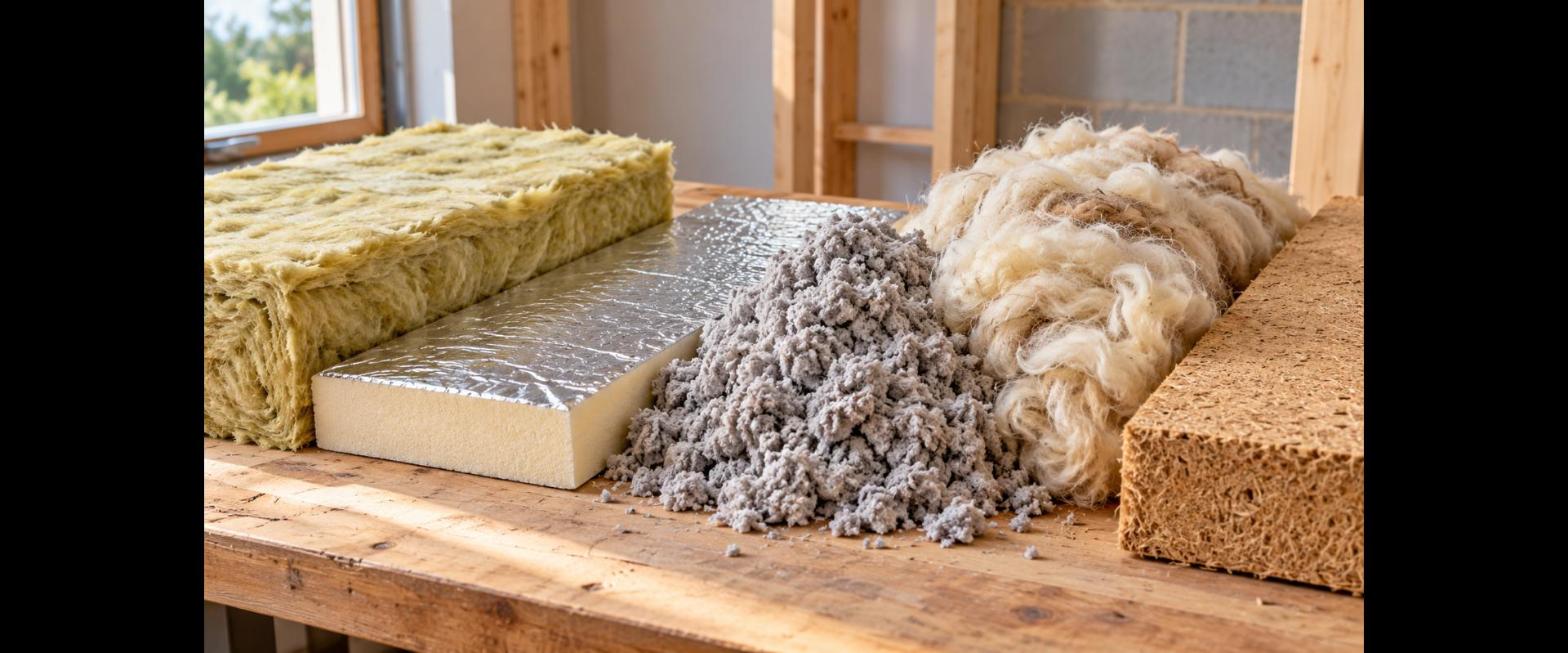
Each insulation material has a place where it performs best. Mineral wool rolls and batts suit lofts and stud walls, are inexpensive and do not burn. Rigid foam boards give the most insulation for a given thickness, so they suit floors, flat roofs and walls where space is tight. Blown cellulose fills existing cavities and awkward lofts. Spray foam seals air leaks as it insulates, but it is costly, must be professionally installed and is hard to remove. Natural materials such as wood fibre and sheep’s wool handle moisture well at a higher price.
Where each belongs
| Material | Insulation per thickness | Typical use | Strengths | Watch for |
|---|---|---|---|---|
| Glass or rock mineral wool | Moderate | Lofts, stud walls, between joists | Low cost; non-combustible; sound absorbing | Must stay dry and uncompressed |
| Rigid foam board (PIR, EPS, XPS) | High | Floors, flat roofs, external and internal wall lining | Thin for its performance | Joints need sealing; fire rating varies by product |
| Blown cellulose | Moderate | Existing wall cavities; loft top-ups | Fills gaps; recycled content | Professional installation; must stay dry |
| Spray foam | High (closed cell) | Rim joists, awkward voids | Air seals as it insulates | Cost; ventilation and moisture risk; can affect resale or lending in some markets |
| Wood fibre, sheep’s wool, hemp | Moderate | Breathable wall and roof build-ups in older buildings | Buffers moisture; low embodied carbon | Higher cost; thicker layers |
Local building regulations set minimum performance and fire requirements, so check them before choosing.
No single insulation material is best everywhere. Each has a combination of thermal performance, moisture behaviour, cost and installation method that suits certain locations and not others. Getting the match right matters more than chasing the highest R-value per inch.

Mineral wool: glass and rock
Batts or rolls of spun fibre. Inexpensive, widely available, non-combustible, and good acoustically. Performance per thickness is moderate, so it needs depth.
Best for: loft floors between joists, timber stud walls, internal partitions for sound, around flues where non-combustibility matters.
Watch: it loses performance if compressed or if gaps are left. Rock wool handles moisture better than glass wool, but neither should be allowed to stay wet.
Rigid foam board
Boards of polyisocyanurate, phenolic or extruded polystyrene. The highest performance per millimetre, which makes them the choice where thickness is constrained. Foil-faced boards add a vapour control layer.
Best for: internal wall insulation where floor space is precious, above or below rafters, under floor screeds, and on flat roofs.
Watch: joints must be taped and sealed or performance collapses at the gaps. Cost per square metre is high, and most foams are combustible and need appropriate fire protection.
Blown cellulose
Recycled paper fibre treated with fire retardant, blown into cavities or loft spaces. It fills awkward shapes and around obstructions far better than batts, and has a low embodied carbon footprint.
Best for: existing walls accessed by drilling, irregular loft spaces, and over the top of existing loft insulation.
Watch: it can settle over time if installed at the wrong density, so installer competence matters. It must stay dry.
Spray foam
Open cell is lighter, vapour permeable and cheaper. Closed cell is dense, high performance, and acts as an air and vapour barrier.
Both seal air leaks as they insulate, which is their main advantage, and both are rigid once cured.
Watch carefully: spray foam applied directly to the underside of roof tiles or to timber without a ventilation path has caused serious problems – trapped moisture, rot in rafters, and in several markets difficulties obtaining a mortgage or survey sign-off on affected properties. It also makes future roof repairs very difficult. Get independent advice before applying it to a roof, and use an installer who provides a proper condensation risk analysis.
Natural materials
Sheep wool, wood fibre, hemp and cork. Moderate thermal performance, good moisture buffering, low embodied carbon, and they handle vapour in a way that suits older breathable buildings.
Best for: traditional solid wall buildings where trapping moisture would cause damage, and for anyone prioritising low-impact materials.
Watch: higher cost and sometimes limited availability.
Matching material to location
- Loft floor: mineral wool or blown cellulose, to full recommended depth
- Room in roof: rigid board between and under rafters, with a ventilation gap maintained above
- Cavity wall: blown bead or mineral fibre by a certified installer
- Solid wall internally: rigid board or wood fibre with careful vapour control
- Solid wall externally: mineral wool or EPS under render
- Suspended timber floor: mineral wool supported by netting, or rigid board between joists
- Solid floor: rigid board under a new screed
The two things that decide performance
First, continuity. A gap, a compressed section or an untaped joint lets heat bypass the insulation entirely, and a small percentage of missing coverage costs a disproportionate share of the benefit. Second, moisture management. Insulation changes where the dew point sits in a wall or roof build-up, so vapour control and ventilation must be designed alongside it. Adding insulation without thinking about moisture is how condensation and rot problems start.


