Most households use far more water than they need, and a lot of it is not need at all; it leaks quietly through old taps, inefficient flushes, and habits no one questions. The encouraging part is that fixing it is cheap, fast, and mostly a weekend job. Below are six upgrades that together can cut a home’s water use nearly in half, ranked by impact and cost. None requires a plumber for most homes, and the payback shows up in both your water and your energy use.
Why the energy use too? Because a large share of household water is heated, so wasting hot water wastes the energy that heated it. Saving water and saving energy are the same project, which is why these upgrades sit alongside the steps in our home energy guide.
The high-impact, low-cost upgrades
1. Tap aerators
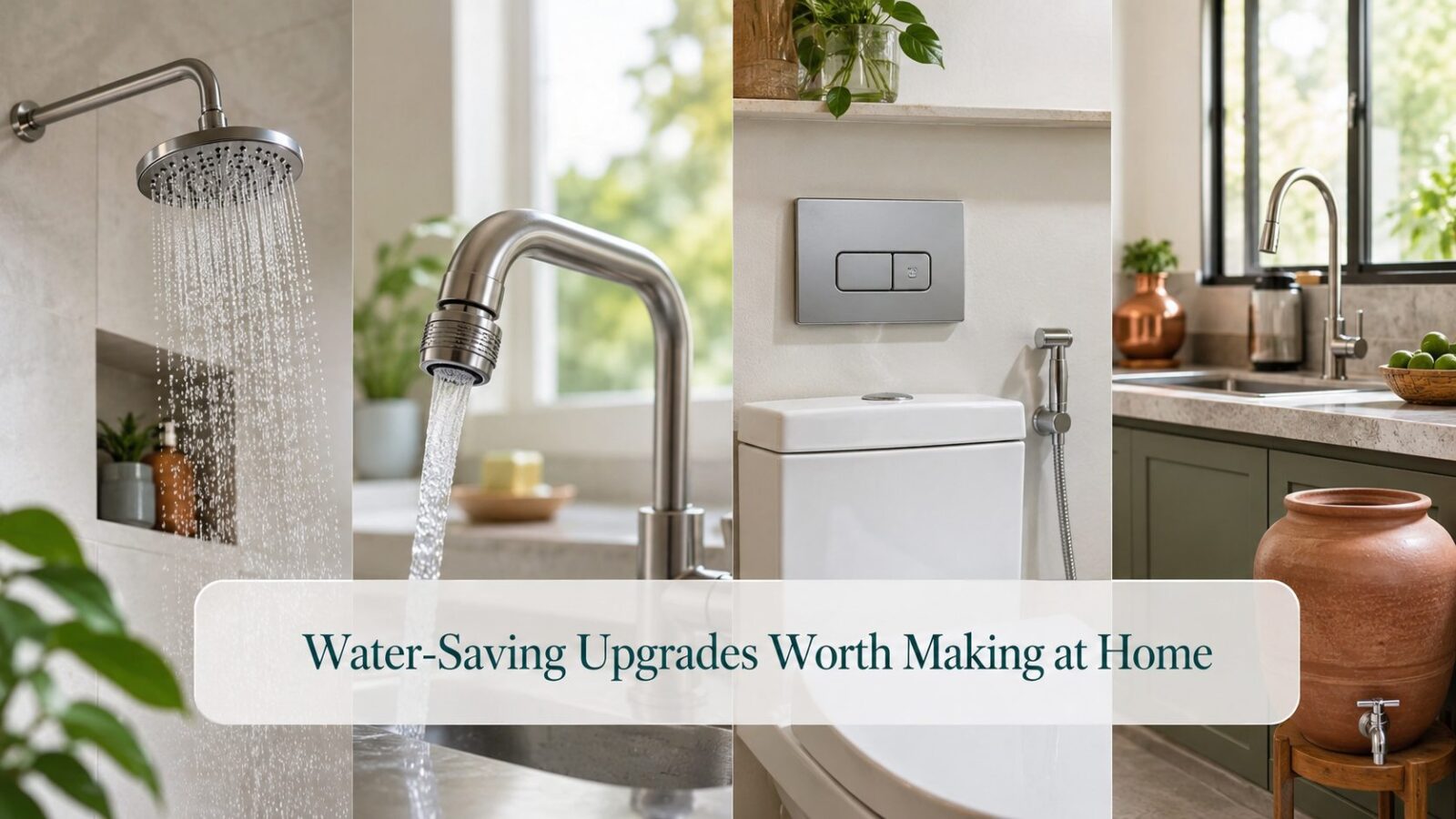
The single best value water upgrade. An aerator screws onto the tap and mixes air into the flow, cutting water use 25-50% while the stream still feels strong. It is inexpensive, pays for itself in weeks, and takes minutes to fit.
2. Low-flow showerhead
Showers are a major water and hot-water cost. A good low-flow showerhead cuts flow substantially with no real loss of experience, saving both water and the energy used to heat it. Fitted in minutes.
3. Dual-flush or a cistern displacement device
Older single-flush toilets use far more water than needed. A dual-flush conversion, or simply placing a filled bottle in the cistern, cuts per-flush volume immediately for almost nothing.
The bigger upgrades (still worth it)
4. Fix every leak first
A dripping tap can waste thousands of litres a year, and a leaking toilet valve far more, silently. Before buying anything, check taps, flush tanks, and joints; fixing leaks is often the biggest single saving and costs only a washer or a valve.
5. An efficient washing machine
Washing is a large water user. Front-loaders use markedly less water than older top-loaders, and running only full loads multiplies the saving. If your machine is ageing anyway, efficiency should drive the replacement, the same logic that applies to the appliance upgrades in our guide to a greener home.
6. Rainwater harvesting
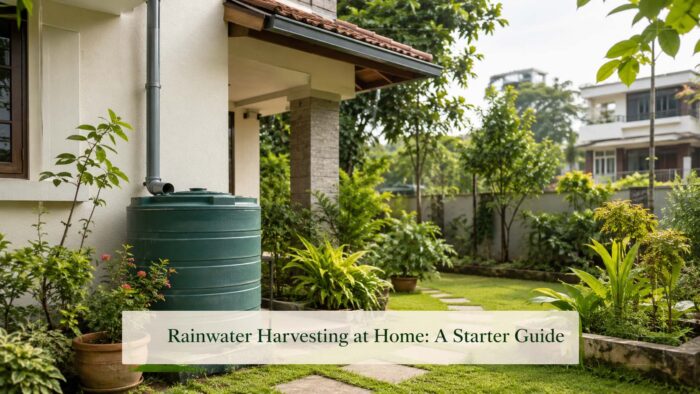
The biggest structural step, and increasingly encouraged or required for new buildings. Capturing roof runoff for non-potable use, or to recharge groundwater, can dramatically cut mains demand. It is a larger project, covered in our rainwater harvesting guide, but for many homes it is the upgrade with the greatest long-term payoff.
Habits that cost nothing
- Turn off the tap while brushing, shaving, or soaping; running taps waste litres a minute.
- Reuse suitable household water for plants, mopping, or flushing rather than letting it drain away.
- Run washing machines and dishwashers only on full loads.
- Collect the cold water that runs before a shower warms up and use it for plants.
- Water the garden early or late to cut evaporation, and use a watering can rather than a hose.
A realistic weekend plan
- Saturday morning: check and fix every leaking tap, flush tank, and joint.
- Saturday afternoon: fit aerators on all taps and a low-flow showerhead.
- Sunday: convert or adjust the toilet cistern and set up water reuse for plants.
- Later: plan the bigger steps, an efficient washing machine and rainwater harvesting.
How much can you actually save?
It helps to see roughly where the litres go, so you can aim the effort. In a typical home the rough split is:
- Bathing and showers: often the single largest use; low-flow fittings and shorter showers cut it sharply.
- Toilet flushing: a big share, especially with old single-flush cisterns; dual-flush or a displacement bottle helps immediately.
- Taps in kitchen and bathroom: aerators plus turning taps off while soaping make a real dent.
- Washing clothes: full loads and an efficient machine matter most here.
A home that fixes leaks and addresses these four areas can realistically cut its water use toward half of where it started.
Common mistakes
- Buying gadgets before fixing leaks, which are often the biggest waste of all.
- Letting reusable water drain away when it could mop floors or water plants.
- Assuming low-flow fittings ruin the experience; good ones do not.
- Ignoring hot-water waste, which costs water and energy together.
- Treating rainwater harvesting as too big to bother with, when it has the largest long-term payoff.
Editor’s note
The fastest water saving in most homes is free: find and fix the leaks. A single silently running toilet valve or a dripping tap can waste more water than all your careful habits save, and people overlook it for years. Spend the first hour checking for leaks, then fit aerators and a low-flow showerhead the same weekend. Those steps alone cut most homes’ usage sharply, and they pay back in both water and energy. The bigger upgrades can follow once the easy waste is gone.
Frequently asked questions
What is the cheapest way to save water at home?
Fixing leaks and fitting tap aerators. Leaks are pure waste and cost only a washer to repair, while aerators cut tap flow by a quarter to a half cheaply, paying back within weeks.
Does saving water also save energy?
Yes, because much household water is heated. Cutting hot-water use through low-flow fittings and shorter showers reduces the energy used by your water heater, so the two savings come together.
Is rainwater harvesting worth it for a single home?
For many homes, yes, especially where it is encouraged or where supply is unreliable. It is a larger upfront project but offers the greatest long-term reduction in mains water demand and helps recharge groundwater.
How do I know if I have a hidden water leak?
A simple test: note your water usage at a quiet time, use no water for a few hours, and check whether the reading has moved. If it has, water is escaping somewhere. The usual culprits are a slowly running toilet valve, which is silent, and dripping taps or pipe joints. Catching these early is the cheapest water saving there is.
Can I add rainwater harvesting to an existing home?
Yes, retrofitting is common and often straightforward. Most homes already have a roof and downpipes, so adding a simple filter and either a storage tank or a recharge pit to the existing setup is quite achievable. The cost and complexity depend on your layout and whether you choose storage, recharge, or both, but you do not need a new building to start harvesting effectively, which makes it a realistic upgrade for almost any home.
The bottom line
Cutting a home’s water use is mostly cheap and quick: fix leaks, fit aerators and a low-flow showerhead, adjust the toilet cistern, and reuse suitable water, all in a weekend. Add an efficient washing machine and rainwater harvesting over time. Because so much water is heated, these upgrades trim your energy use too, making water saving one of the best-value home improvements you can make.