Energy prices have climbed in most parts of the world over the past few years, and they are not coming back down. The good news is that the average home wastes a surprising amount of what it pays for, and clawing it back rarely needs a big investment. Below are 15 actions ranked by actual savings for a typical household. Most pay for themselves within a year, and the top few are essentially free. Ignore the order at your peril, because spending effort on the small items while skipping the big ones is how people stay frustrated with their energy costs.
Before changing anything, get a rough sense of where your energy goes. In almost every home the answer is the same: heating and cooling first, then the fridge and water heating, not the lights people tend to obsess over.
The big savers (free or near-free)
1. Ease the thermostat by a few degrees
The biggest free saving by far. Setting cooling a little warmer in summer and heating a little cooler in winter cuts consumption 20-30% with no hardware and little comfort loss once you adjust. This single habit often saves more than every gadget combined.
2. Switch to LED lighting
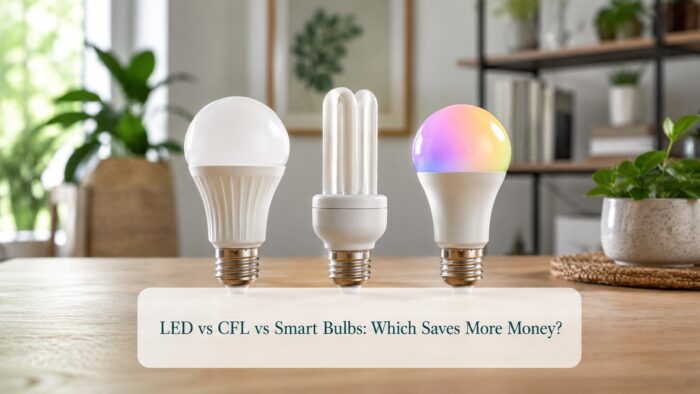
LEDs use 75-85% less than incandescent and far less than older CFLs, and they pay back within months. The full comparison is in our guide to LED versus CFL versus smart bulbs.
3. Use fans and natural airflow
A fan costs a tiny fraction of an air conditioner to run. Using fans alone in milder weather, and alongside cooling otherwise, lets you ease the thermostat further and cut cooling hours.
High-value upgrades (clear payback)
4-6. Replace the oldest appliances
The fridge runs every hour of every day, and old heating or cooling can use nearly double what a modern unit needs. Replacing decade-old units with the highest efficiency rating you can find is the highest-value upgrade after the free changes.
- 4. Air conditioner or heater over 7 years old. A modern variable-speed model saves a large share of its running cost.
- 5. Fridge over 8 years old. A high-efficiency model uses 30-40% less, around the clock.
- 6. Old water heater. A solar or heat-pump unit, or a timer and insulation, cuts heating cost sharply.
When buying, choose by the energy-efficiency rating for the capacity you actually need, not by the showroom pitch.
Smart controls and awareness
7-9. Spend where you can see it
You cannot manage what you do not understand. Smart plugs, timers, and an awareness of which appliances draw the most turn vague worry into specific action, and the devices that genuinely pay back are listed in our roundup of smart devices for energy savings.
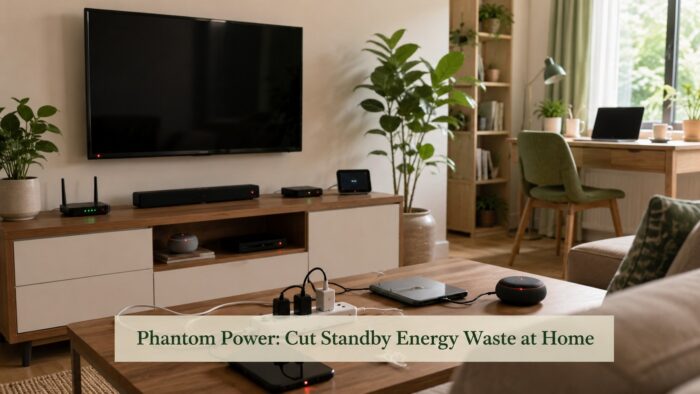
- 7. Smart plugs and timers. Kill standby draw and schedule heavy appliances.
- 8. Energy awareness. Knowing your biggest users lets you target them precisely.
- 9. Servicing. A clean filter and coil restore 10-15% of lost efficiency.
The habits (small but constant)
- 10. Switch off at the wall rather than leaving devices on standby.
- 11. Run full, cold washing loads; water heating is most of a wash’s energy.
- 12. Keep the fridge coils clean and the door sealed so it does not overwork.
- 13. Use natural light and ventilation during the day.
- 14. Iron and batch chores to avoid repeated reheating and short cycles.
- 15. Cook efficiently with lids and right-sized pots to cut cooking energy.
Whether to go solar
Once you have squeezed the free and high-value savings, the remaining usage is what solar would offset. For many homes that own their roof, rooftop solar is the logical next step, but only after the easy savings, never instead of them. The honest payback maths is in our solar power cost analysis, and going solar on top of a wasteful home just means buying a bigger, costlier system than you need.
Heating and cooling: the biggest lever
Because climate control dominates most homes’ energy use, it deserves focused attention beyond easing the thermostat. A few measures compound with the free settings to cut the largest part of your usage.
- Service heating and cooling units yearly so clean filters and coils restore lost efficiency.
- Seal gaps around windows and doors so conditioned air does not leak away.
- Reduce heat gain in summer with shading and reflective roof treatment, and heat loss in winter with insulation.
- Use fans and zoning so you condition only the rooms in use, not the whole home.
Get climate control right and every other saving on this list works harder, because the home needs less heating and cooling in the first place.
Common mistakes
- Obsessing over lights while heating, cooling, the fridge, and water heating quietly dominate usage.
- Over-cooling or over-heating and blaming energy prices for the result.
- Keeping a decade-old appliance running because it “still works”.
- Installing solar before fixing waste, then oversizing and overspending on the system.
- Never checking where the energy goes, so you cannot see what to fix.
Editor’s note
The most common reason a home’s energy cost stays high is a thermostat pushed too hard and an appliance kept a few years too long. Both feel harmless and both are expensive. Start by easing the thermostat and switching to LEDs this week, then plan to replace your oldest power-hungry appliance with a high-efficiency model. Those moves alone fix most homes, and they cost far less than people fear. Solar, if it suits you, is the reward you earn after the waste is gone, not the first thing you buy.
Frequently asked questions
What uses the most energy in a typical home?
Usually heating and cooling, followed by the refrigerator, which runs all year, and water heating. Lighting is a distant concern once you have switched to LEDs.
Does easing the thermostat really save that much?
Yes. Each degree of extra heating or cooling raises consumption noticeably, so easing the setting a few degrees can trim 20-30% off that part of your usage, at no cost.
Are high-efficiency appliances worth the higher price?
For appliances that run heavily, like cooling and the fridge, yes. The annual savings usually recover the price premium within a few years, after which the lower running cost is pure benefit.
Why does my energy use spike seasonally?
Almost always heating or cooling. As outdoor temperatures swing, the work to keep the home comfortable rises sharply, which is why easing the thermostat, servicing the unit, and improving insulation have the biggest seasonal effect.
The bottom line
Lowering a home’s energy cost follows a clear order: free changes first, ease the thermostat and switch to LEDs; then high-value appliance upgrades to efficient models; then smart controls and habits; and finally solar if your roof suits it. Target the biggest users, choose appliances by efficiency rating, and the next price rise stops being something you simply absorb.