Solar advertising promises a quick payback and “free electricity for life”. The honest answer for most homes is a longer payback, followed by genuinely cheap power for many years after that. That is still a good investment for the right household, but the gap between the brochure and reality is where buyers get burned. This is the real math, the conditions that decide whether rooftop solar makes sense for you, and the situations where you should not bother. None of it is complicated once the salesperson is out of the room.
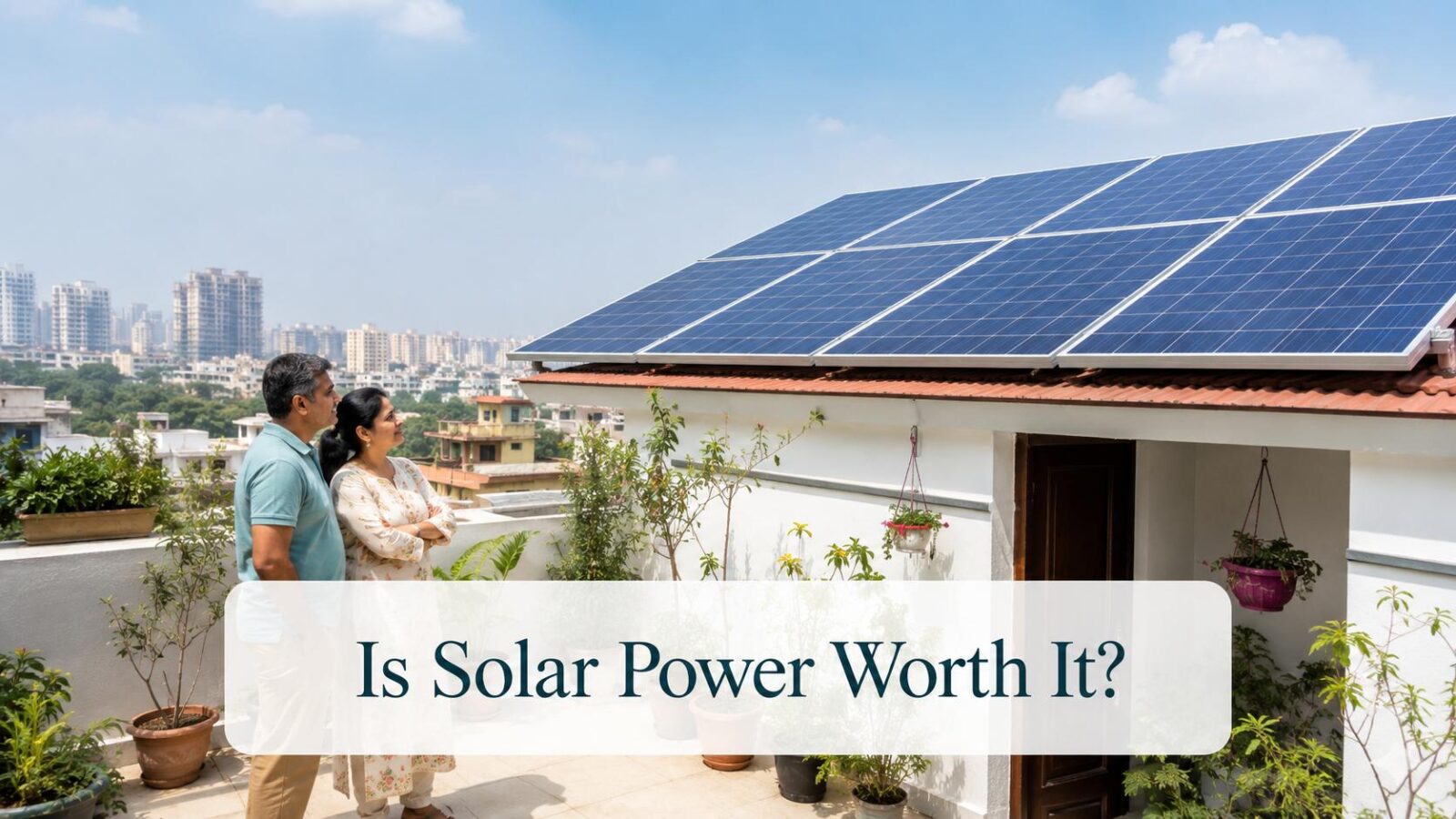
Solar is worth it when three things line up: you own your roof, you have decent sunlight and space, and you can either use most of the power yourself or export the surplus on reasonable terms. Miss any of those and the numbers change sharply, so check them before you fall in love with the idea.
The real payback math
A residential system’s payback depends almost entirely on how much you pay for grid power and how much of your own generation you use directly. Solar offsets your most expensive units first, so a home with high consumption and high rates sees the fastest return; a home that uses little and exports cheaply waits longer. The realistic payback is usually several years longer than the headline figure in the advertisement, which is exactly why you should run your own numbers rather than trust a generic claim.
Sizing and using your system
The cheapest unit of solar is the one you actually use as it is generated, rather than exporting it cheaply and buying it back later. That makes two things matter: sizing the system to your real consumption instead of oversizing it, and shifting flexible usage, laundry, dishwashing, water heating, into daylight hours. Working out the right size for your roof and usage is covered in our guide to how many solar panels a home needs, and getting it right is what turns a decent investment into a strong one.
When solar is clearly worth it
- You own the roof and plan to stay in the home for many years.
- You have a shade-free roof area of adequate size facing the sun.
- Your energy use is high and your rates are expensive.
- You can use most of your generation directly or export it on fair terms.
- You use a good share of your power during daylight hours.
When to think twice
- You rent, or expect to move within a few years.
- Your roof is heavily shaded, small, or shared without the right approvals.
- Your energy use is already low because consumption is modest.
- Local rules for using or exporting surplus power are restrictive or uncertain.
- You have not yet done the free and cheap efficiency fixes that would shrink the system you need.
Efficiency first, then solar
Every wasteful appliance you fix shrinks the system you have to buy, so the high-return efficiency steps in our guide to lowering home energy costs should come before any quote. A home that has switched to LEDs, runs efficient heating and cooling, and uses an efficient water heater needs a smaller, cheaper array, which improves the payback on the solar itself.
Ongoing costs and upkeep
Solar is low-maintenance but not no-maintenance. Output drops if panels are dusty or shaded, and an inverter typically needs replacing once over the system’s life. Budgeting for cleaning and the occasional service keeps generation, and therefore savings, where it should be; the routine is covered in our solar panel maintenance guide. Factor these modest costs into your payback rather than assuming the panels simply run free forever.
Do you need battery storage?
Installers love to bundle in batteries, which can sharply raise the cost and lengthen the payback. For most homes that can use power as it is generated or export the surplus on fair terms, batteries are optional rather than essential, and adding them by default is the fastest way to turn a sound investment into a poor one.
- Worth considering if your area has frequent, long outages and you want backup power.
- Worth considering if surplus power is poorly compensated where you live, so storing it yourself is better than exporting.
- Usually skip if your supply is reliable and you can use or fairly export most of your generation.
Common mistakes
- Believing the headline payback claim instead of running your own numbers on your rates.
- Installing solar while renting or before a likely move.
- Oversizing the system because you skipped the cheap efficiency fixes first.
- Ignoring how surplus power is treated locally, which affects much of the saving.
- Choosing the cheapest installer and panels, then losing output to poor work.
Editor’s note
Solar is a genuinely good investment for the household that owns its roof, has high consumption, and stays put, and a poor one for almost everyone else. The salesperson will not draw that line for you, so draw it yourself: confirm roof ownership, sunlight, and how you can use or export the power, then run the payback against your actual rates, not a generic claim. Do the cheap efficiency work first so you buy a right-sized system. Get those steps in order and solar pays off; skip them and you have bought an expensive roof ornament.
Frequently asked questions
What is the real payback period for home solar?
For most homes it is several years longer than the advertised figure, depending on your rates, sunlight, system cost, and how much generation you use directly. Run the math on your own usage rather than trusting a generic claim.
Is solar worth it if I rent my home?
Usually not, because the long payback means you may move before recovering the cost, and the system stays with the property. Solar suits owners planning to stay many years.
How long do solar panels last?
Quality panels typically carry performance warranties of around 25 years and keep generating well beyond their payback period. The inverter usually needs replacing once during the system’s life, which a sound payback calculation should include.
Can I add more solar panels later?
Often yes, though it is easier if you plan for it from the start. Some setups have spare capacity that allows extra panels to be added, while others would need a larger inverter or separate equipment to expand. If you expect your energy use to grow, perhaps with an electric vehicle in future, it is worth discussing expansion options before installation so the initial design leaves room to grow rather than forcing a costly rework later.
The bottom line
Rooftop solar is worth it for owners with high usage, good roofs, and a fair way to use or export the power, with a realistic payback and cheap power thereafter. It is not a universal win. Check the conditions, run the math on your own rates, size the system to your usage, and fix the cheap inefficiencies first, and you will know within an afternoon whether solar is an investment or a mistake for your home.