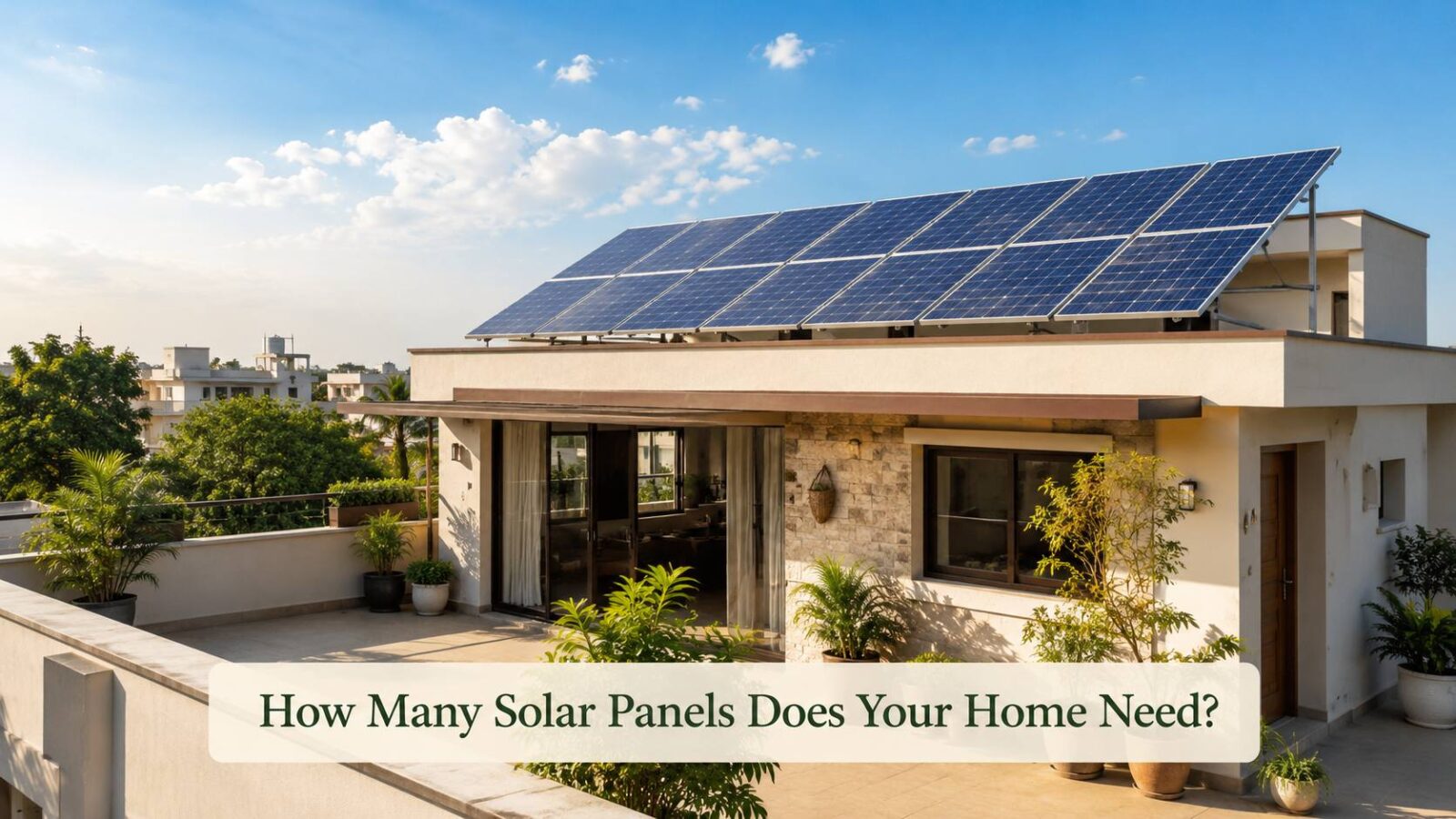
One of the first questions every solar buyer asks is also one of the easiest to get wrong: how many panels do I actually need? Installers have an incentive to sell you a larger system, and buyers, unsure of the maths, often go along with it, then either overpay for capacity they cannot use or, less often, end up short. Getting the size right is the difference between a strong investment and a mediocre one. This guide walks through how to work out the right number of panels for your home, in plain terms, before anyone hands you a quote.
The honest principle is to size the system to the energy you actually use and can use as it is generated, not to your roof’s maximum capacity or a salesperson’s round number. A right-sized array pays back faster than an oversized one almost every time.
Start with how much energy you use
The foundation of sizing is your own consumption, measured in units of energy over a typical month and across the seasons. A home that uses a lot, with heavy cooling or heating, needs more panels than a lean one; there is no universal answer. Before sizing anything, it is worth doing the cheap efficiency work in our home energy guide, because every wasteful appliance you fix shrinks the system you need to buy and improves its payback.
How much each panel produces
A panel’s output depends on its rating and, crucially, on how much sun your location and roof actually receive. The same panel generates far more in a sunny, unshaded spot than in a cloudy or partly shaded one. What matters is not the headline rating but the realistic daily generation across the year, which is why local sunlight and roof orientation drive the calculation as much as the panels themselves.
The simple sizing logic
- Estimate your usage: work out your typical energy use and how it changes by season.
- Decide what share to cover: many homes aim to offset a large part, not necessarily all, of their usage.
- Account for real sunlight: factor in your location, roof orientation, and any shading.
- Translate into panels: divide the generation you need by what each panel realistically produces locally.
- Check it fits the roof: confirm the panel count fits your usable, shade-free roof area.
A good installer will do this properly; understanding the logic lets you tell a sound proposal from an oversized one.
Roof, orientation, and shading
Even the right number of panels underperforms on the wrong roof. Orientation toward the sun, a tilt suited to your latitude, and freedom from shade by trees, tanks, or neighbouring buildings all decide real output. A smaller array on an ideal roof can beat a larger one on a compromised roof, so assess the roof honestly before counting panels. Whether the whole project pays off, once sizing and roof are accounted for, is covered in our solar cost analysis.
Leaving room to grow
Your energy use may rise in future, perhaps with an electric vehicle, so it is worth deciding upfront whether to size for today or for tomorrow. Some setups leave room to add panels later; others would need a larger inverter to expand. Planning for the home’s future needs, including any move toward home EV charging, avoids an expensive rework down the line and is part of building a sensible, future-ready system from the start.
Common mistakes
- Sizing to the roof’s maximum capacity rather than to what you actually use.
- Accepting a salesperson’s round number without checking it against your usage.
- Ignoring shading and orientation, then wondering why output is low.
- Skipping the cheap efficiency fixes first, so you buy a bigger system than needed.
- Failing to plan for future needs like an electric vehicle.
Editor’s note
The single best thing you can do before getting solar quotes is to understand your own energy use and do the cheap efficiency work first. A leaner home needs fewer panels, which means a smaller, cheaper system with a faster payback, and it stops an installer from upselling you capacity you will only export cheaply. Size to what you genuinely use, assess your roof honestly for sun and shade, and leave a little room for the future. Get the sizing right and everything else about solar gets easier.
Frequently asked questions
How do I work out how many solar panels I need?
Start from your typical energy use, decide what share you want to cover, then account for your local sunlight, roof orientation, and shading to estimate what each panel realistically produces. Dividing the generation you need by per-panel output gives the count, which must then fit your usable roof.
Is it better to oversize or undersize a solar system?
Neither extreme. Oversizing wastes money on capacity you may only export cheaply, while undersizing leaves savings on the table. Sizing to the energy you actually use, after doing cheap efficiency fixes, usually gives the best payback.
Does roof direction really affect how many panels I need?
Yes. A roof oriented toward the sun with little shade produces more per panel, so you need fewer for the same result, while a poorly oriented or shaded roof needs more or may not suit solar well. Assess the roof before counting panels.
Should I size for an electric vehicle I might buy later?
If an electric vehicle is likely, it is worth planning for the extra energy use now, either by sizing a little larger or ensuring the system can expand. That avoids a costly rework later, though you should balance it against paying upfront for capacity you will not use for a while.
Can I add more panels to my system later?
Often yes, though it is easier if you plan for it. Some setups leave spare capacity that allows extra panels, while others would need a larger inverter or additional equipment to expand. If your energy use is likely to grow, it is worth discussing expansion options before installation so the initial design leaves room to grow rather than forcing a costly rework later.
What happens to surplus solar power I do not use?
It depends on your local arrangements. In many places you can export surplus to the grid and receive some credit or payment, while elsewhere the terms are less generous, which makes using your own generation directly more valuable. Because the treatment of surplus affects sizing, it is worth understanding the local options before deciding how large a system to install.
Do solar panels work on cloudy days?
Yes, just at reduced output. Panels generate from daylight, not only direct sun, so they still produce on overcast days, though less than in bright conditions. This is why sizing is based on realistic year-round generation for your location rather than peak sunny-day output, and why a string of cloudy weather lowers, but does not stop, your generation.