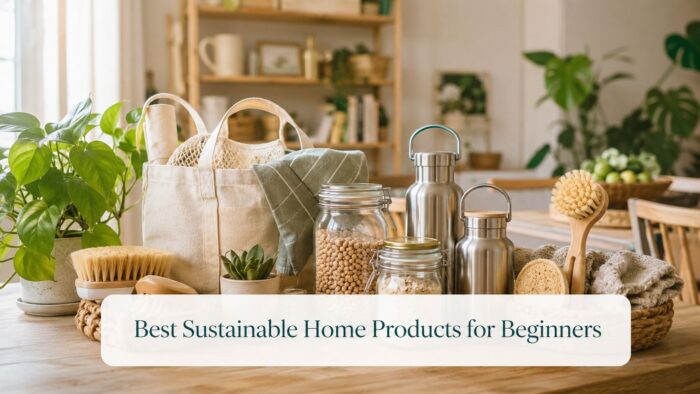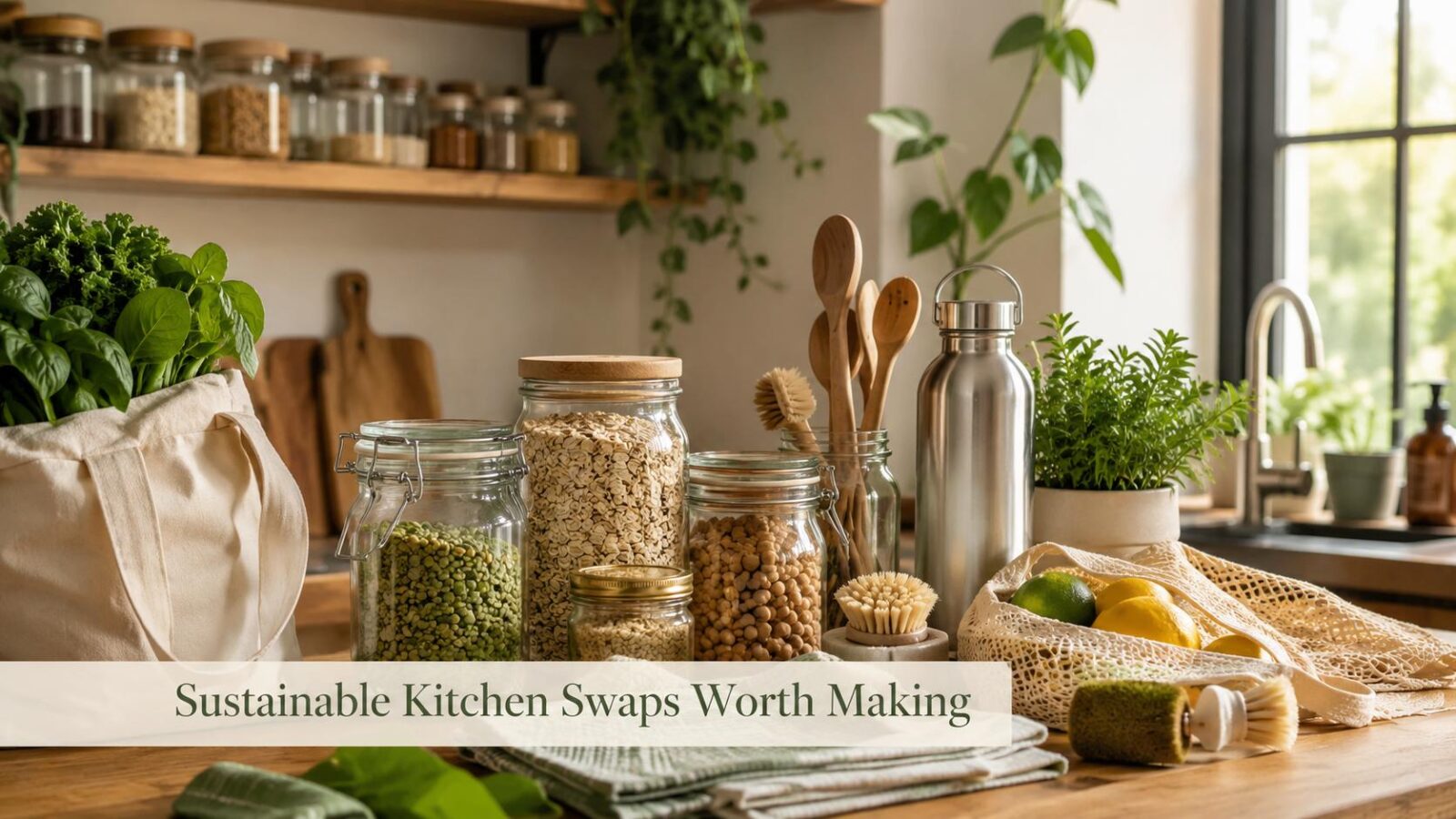
The kitchen is where a home generates most of its daily waste, packaging, cling film, paper towels, worn-out pans, and where small, sensible swaps add up fastest. It is also where greenwashing thrives, with shelves of “eco” gadgets that solve trivial problems at premium prices. The swaps worth making are the ones that replace something you use and discard often, durable tools instead of disposable ones, reusables instead of single-use. This guide ranks the kitchen swaps that genuinely cut waste and cost over time, and flags the ones that are mostly marketing.
The guiding test, as in our wider sustainable products guide, is frequency: a swap that replaces a daily disposable does real, repeated good, while a single-use “eco” novelty mostly just feels virtuous. Apply that test and the worthwhile swaps become obvious.
Storage and wrapping
This is where the easiest, highest-value kitchen swaps live, because cling film and disposable bags are used and binned constantly.
- Glass and steel containers in place of disposable plastic boxes; durable, safe, and endlessly reusable.
- Beeswax or cloth wraps instead of cling film for covering bowls and wrapping food.
- Reusable produce and bread bags to replace the thin plastic ones from the shop.
- Silicone or steel lids that fit over bowls and pans, retiring foil and film.
Cookware and tools
Durability is the sustainability story here. Flimsy non-stick pans and cheap plastic tools wear out and are thrown away repeatedly; better-made alternatives are bought once.
- Cast iron and stainless steel cookware that lasts decades instead of non-stick that degrades in a few years.
- Wooden or steel utensils in place of plastic ones that warp, stain, and break.
- A good knife, well maintained over years rather than replaced cheaply.
- Durable, proven basics, the steel container, the pressure cooker, the heavy pan, that last a lifetime.
Cleaning and waste
How you handle scraps closes the loop. Swapping paper towels for cloth and routing food waste to compost cuts a surprising amount of daily kitchen rubbish.
- Cloth kitchen towels and napkins instead of paper rolls used once and binned.
- Durable, refillable tools rather than disposable plastic-handled ones.
- A compost bin for peels and scraps, feeding the loop described in our composting guide.
- Reusable filters and steel strainers instead of disposable paper ones where practical.
Swaps not worth the money
- Single-use “compostable” plates and cutlery that need industrial composting most areas lack.
- Pricey single-purpose “eco” gadgets that replace a job a knife or hand already does.
- Premium natural-fibre items bought to replace perfectly good existing tools.
- Novelty zero-waste kits that bundle a few useful items with several you will never use.
Building the swaps gradually
You do not need to overhaul the kitchen at once. Replacing things as they wear out spreads the cost and avoids the waste of discarding usable items.
- Start with disposables: bring in cloth towels, reusable bags, and containers to retire film and paper.
- Replace as they break: swap worn non-stick and plastic tools for cast iron, steel, and wood over time.
- Add a compost bin: route peels and scraps out of the bin and into the garden.
- Refine buying habits: choose loose, bulk, and refill options to cut packaging at the source.
Common mistakes
- Buying a drawer of eco gadgets while still wrapping everything in cling film.
- Replacing working cookware and tools just to own “sustainable” versions.
- Choosing single-use compostables that cannot actually be composted locally.
- Focusing on rare items while ignoring the daily film, foil, and paper towels.
- Paying premium prices for novelty kits over simple, durable staples.
Editor’s note
The most sustainable kitchen is not the one with the most eco gadgets; it is the one where things are used until they wear out and then replaced with something durable. Start with the daily disposables, cling film, paper towels, plastic bags, since swapping those for containers, cloth, and wraps removes the most waste for the least money. Lean on durable tools, the steel, the cast iron, the heavy pan, and route your scraps to compost. Ignore the novelty kits; a few good staples and the habit of reuse do the real work.
Frequently asked questions
What is the easiest sustainable kitchen swap to start with?
Replacing cling film and paper towels with reusable wraps, cloth towels, and glass or steel containers. These are used and discarded daily, so swapping them removes the most waste for the least effort and cost, and they last for years.
Is non-stick cookware bad for sustainability?
Cheap non-stick tends to degrade within a few years and gets thrown away, so it is wasteful over time. Durable cast iron and stainless steel last decades and are bought once, making them the more sustainable, and often more economical, choice in the long run.
Are compostable disposables a good kitchen swap?
Usually not, because most compostable plates and cutlery need industrial composting facilities that few areas have, so they end up in landfill like ordinary disposables. A washable reusable is almost always the better choice than any single-use alternative.
What is the most overlooked source of kitchen waste?
Food waste itself, ahead of any packaging. Spoiled produce, leftovers binned, and over-buying quietly dwarf the cling film and bags people focus on. Planning meals, storing food well, using leftovers, and composting what cannot be eaten cut this far more than any single product swap, making it the highest-impact, and cheapest, sustainable kitchen habit of all.
Are expensive eco kitchen brands worth the premium?
Often not. The sustainability of a kitchen item comes mainly from how long it lasts and how often it replaces a disposable, not from a premium label. A sturdy, plain steel container or a basic cast-iron pan does the job as well as a designer eco version at a fraction of the price. Spend on durability and usefulness, lean on proven, affordable basics, and treat premium branding as the least important factor.
How do I store food to waste less of it?
Good storage is one of the biggest waste savers there is. Keep produce in the right conditions, some in the fridge, some out, learn which items spoil fastest and use them first, and store leftovers in clear containers where you will actually see and eat them. Freezing surplus before it turns, and planning meals around what you already have, cuts the food waste that quietly outweighs all the packaging swaps combined.
Should I buy in bulk to cut packaging?
Bulk buying can cut packaging and cost per unit, but only if you actually use what you buy before it spoils. For shelf-stable staples like grains, pulses, and cleaning refills, bulk is a clear win. For perishables, buying more than you will use simply shifts waste from packaging to food, which is worse, so match bulk buying to what your household genuinely gets through.