The “sustainable products” aisle is one of the most greenwashed corners of retail. A leaf on the label and the word “natural” mean nothing, and plenty of “eco” products are more marketing than substance, or solve a problem so small it was never worth the switch. That does not mean sustainable swaps are pointless; it means you have to know which ones genuinely matter and how to tell a real claim from a sticker. Here are the categories where switching makes a real difference for a beginner, the ones not worth the premium, and the certifications that actually carry weight.
The guiding rule is to prioritise products you use often and throw away often. A reusable item that replaces a daily disposable does real good; a one-off “eco” gadget you barely touch mostly soothes your conscience.
Swaps that genuinely matter
Cloth over disposables
Cloth napkins, kitchen towels, and shopping bags replace a steady stream of paper and plastic you would otherwise buy and bin forever. Because the disposable is used daily, the reusable pays for itself quickly and keeps paying. This is among the higher-value everyday swaps in our 25 ways to a greener home.
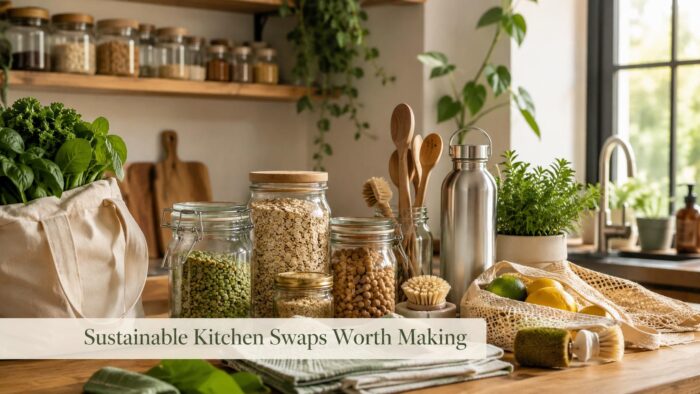
Durable kitchenware
Replacing flimsy plastic and worn-out non-stick items with durable steel, glass, and cast iron means buying once instead of repeatedly. The swaps worth making are detailed in our sustainable kitchen swaps guide.
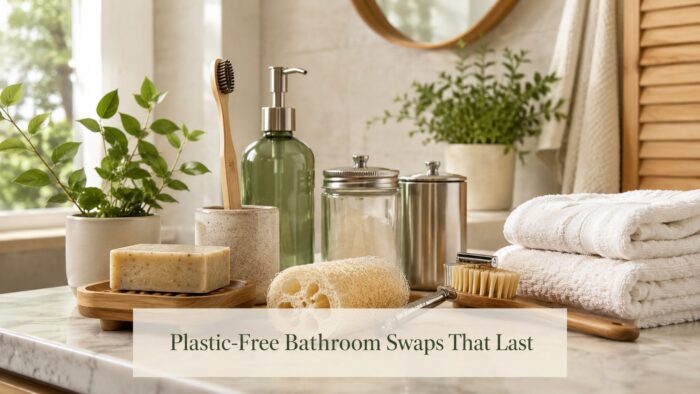
Plastic-free bathroom basics
The bathroom is full of single-use plastic that is easy to replace with longer-lasting alternatives. The swaps that actually last are covered in our plastic-free bathroom swaps guide.
Reusable bottles and containers
A good steel bottle and a set of containers replace a relentless stream of disposable cups, bottles, and cling film. Simple, cheap over time, and genuinely effective.
Swaps that matter less than the marketing suggests
- Bamboo toothbrushes and straws, fine to use, but a tiny effect compared with energy and water choices.
- “Eco” gadgets you use once and forget, where the manufacturing footprint outweighs any saving.
- Expensive natural-fibre everything, when a durable synthetic you keep for years can be the greener choice.
- Single-use “compostable” plastics that only break down in industrial facilities most areas lack.
How to spot real claims
Greenwashing relies on vague words and pretty packaging. A few habits cut through it.
- Distrust vague terms like “natural”, “green”, or “eco-friendly” with no specific, verifiable claim behind them.
- Look for recognised certifications rather than self-declared logos a brand invented.
- Favour products that name what they are made of and how they should be disposed of.
- Ask whether the product replaces something disposable you use often; if not, the benefit is probably small.
- Be wary of buying new “sustainable” items to replace things that still work perfectly well.
Certifications worth recognising
Genuine third-party certifications are harder to fake than a leaf logo. Depending on the product, look for credible marks covering organic content, responsible forestry, energy efficiency, and safe materials. A real certification names an independent body and a standard; a meaningless one is just a brand’s own badge, so check what is actually behind the symbol.
A simple starter kit of swaps
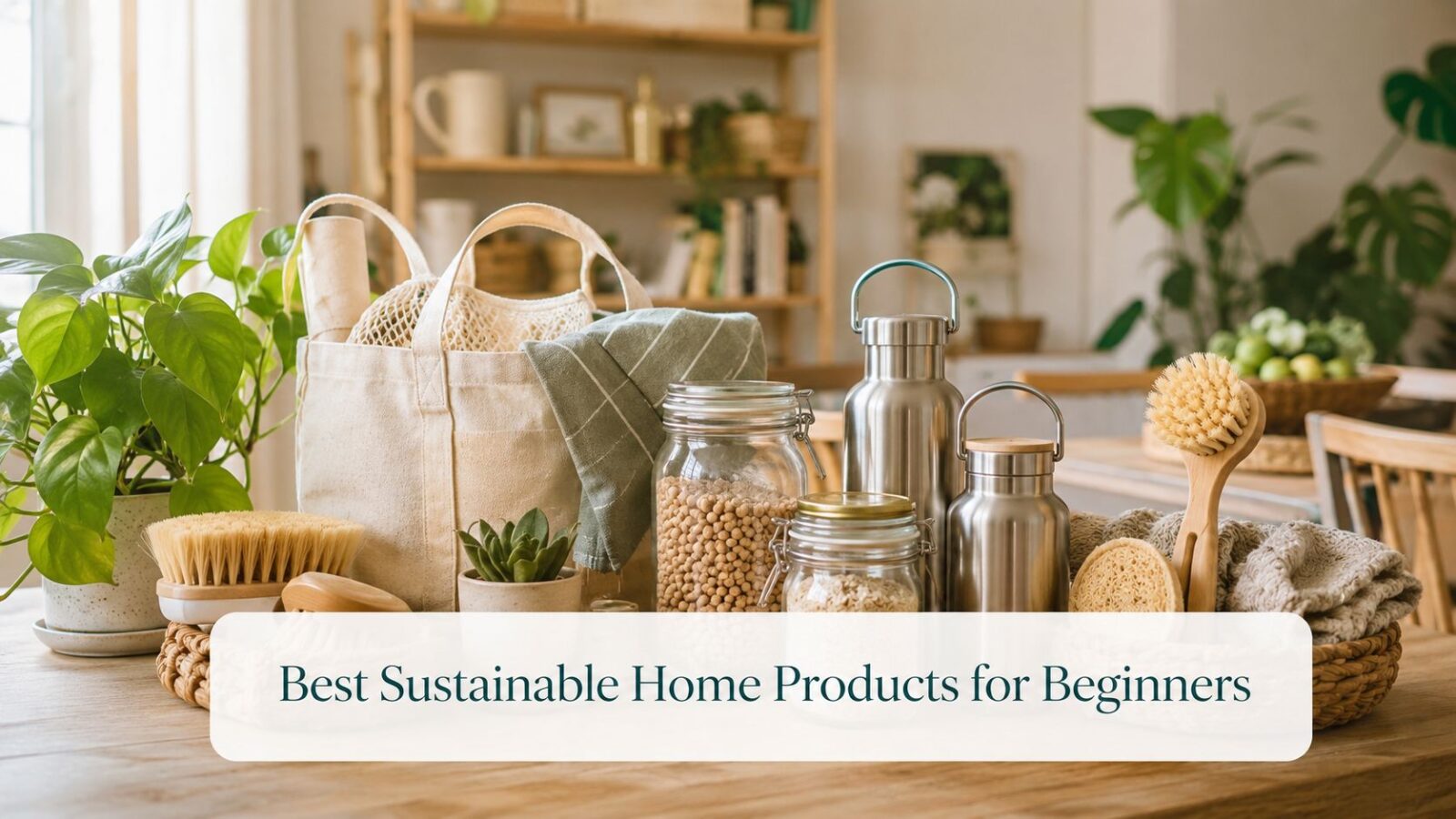
If you want a concrete place to begin without overthinking it, this short list covers the high-value swaps and nothing pointless:
- A set of cloth napkins and kitchen towels to retire paper ones.
- Two or three sturdy cloth shopping bags kept by the door and in the car.
- A good steel water bottle and a few glass or steel storage containers.
- One or two durable kitchen items, steel, glass, or cast iron, to replace worn-out plastic.
- A couple of plastic-free bathroom basics to cut single-use waste there.
That is enough to remove a steady stream of disposables from your home, and every item earns its place by replacing something you would otherwise buy again and again.
Common mistakes
- Buying anything with a leaf and the word “natural” and assuming it is sustainable.
- Replacing working items with “eco” versions, creating waste in the name of greenness.
- Spending on low-impact tokens while ignoring high-impact energy and water choices.
- Trusting self-declared logos instead of recognised third-party certifications.
- Choosing “compostable” disposables that cannot actually be composted where you live.
Editor’s note
The most sustainable product is almost always the one you already own and keep using. Before buying anything labelled eco, ask whether it replaces a frequent disposable or simply makes you feel virtuous. Cloth instead of paper, durable kitchenware instead of throwaway plastic, and longer-lasting bathroom basics are the swaps that genuinely add up; bamboo trinkets and single-use “compostables” mostly do not. Pair a few high-value reusable swaps with the energy and water steps that dominate a home’s real footprint, and ignore the marketing on the rest.
Frequently asked questions
How can I tell if a product is genuinely sustainable?
Look past vague words like “natural” and “eco” for specific, verifiable claims and recognised third-party certifications. Favour products that state their materials and disposal, and that replace something disposable you use often.
Are bamboo products worth buying?
They are fine to use but have a small effect compared with energy and water decisions. Buy them if you like them, but do not mistake them for high-impact changes or let them distract from bigger swaps.
Which sustainable swaps give the most benefit?
Reusables that replace daily disposables, cloth for paper, durable kitchenware for throwaway plastic, longer-lasting bathroom basics, deliver the most, because the disposable they replace would otherwise be bought and binned repeatedly.
Is recycled or recyclable packaging actually better?
It is better than virgin single-use plastic, but recyclability is not a free pass, since collection and processing are patchy and much “recyclable” packaging is never actually recycled. The stronger move is to reduce packaging by choosing refills and durable reusables, then recycle what genuinely can be recycled locally.
Are expensive sustainable brands worth the premium?
Often not. The sustainability of a product comes mainly from how long it lasts and how often it replaces a disposable, not from a premium label. A sturdy, plain steel container or a basic cast-iron pan does the job as well as a designer eco version at a fraction of the price. Spend on durability and usefulness, lean on simple proven staples, and treat premium branding as the least important factor in the decision.
The bottom line
Cutting through the greenwashing is simple once you focus on frequency and proof: prioritise reusable products that replace daily disposables, demand specific claims and recognised certifications rather than leafy labels, and never replace something that still works just to buy an “eco” version. Make a few high-value swaps, choose durable goods, and put your real effort into the energy and water choices that matter most. Done that way, going sustainable costs less, wastes less, and quietly outperforms a trolley full of leafy-labelled gadgets.