Most “smart home trends” articles are vendor wishlists dressed up as forecasts, listing whatever the industry hopes to sell next year. The useful question is narrower: what is actually changing in real homes in 2026, given real budgets and real priorities like rising energy costs. Stripping out the hype leaves a handful of genuine shifts worth knowing about, and a few much-promoted ideas that remain niche or impractical. Here is the honest picture, oriented around what a typical household will really adopt.
The through-line for 2026 is that smart-home technology is maturing from novelty toward utility. The devices gaining ground are the ones that save money or solve a real annoyance, while the showy gadgets stay on the shelf.
Trends genuinely happening
Energy management moves to the centre
With energy prices rising, the smart devices people actually buy are increasingly about cutting usage, smart plugs, thermostats, and energy monitors, rather than entertainment. This is the clearest real trend, and it maps directly onto our roundup of smart devices for energy savings. Expect climate control, via smart AC controllers, to lead, since heating and cooling dominate energy use.
Interoperability improves
For years, devices from different brands refused to cooperate. New cross-ecosystem standards are slowly fixing this, so a bulb, plug, and sensor from different makers can finally work together in one app. This reduces the lock-in and frustration that put many people off, and it makes building a smart home in stages far less risky.
Resilience and backup features
Where power supply is unreliable, devices that handle outages gracefully, retaining schedules, switching to local control, and pairing with backup power, are gaining real traction. Resilience, not just convenience, is becoming a selling point.
Home EV charging enters the picture
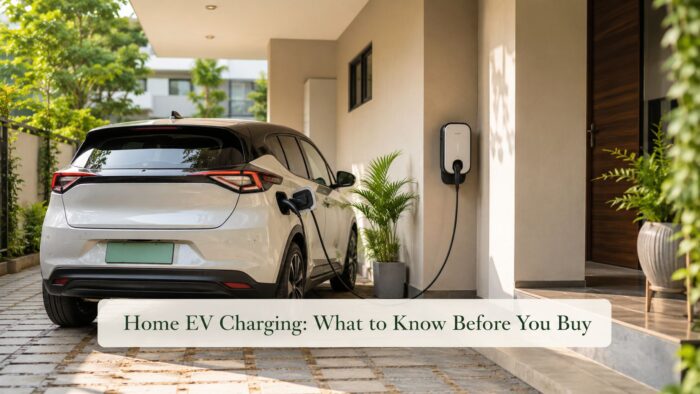
As electric cars and scooters spread, home charging is becoming part of the smart-home conversation, including scheduling charging for cheaper off-peak hours. It is an emerging shift, explored in our guide to home EV charging.
Hype to approach with caution
- Whole-home voice control as a lifestyle, which sells speakers but rarely changes daily life or costs.
- Smart fridges with screens and cameras, expensive and little used in practice.
- Robot everything; a few robots are useful, most are novelties that gather dust.
- Fully automated “homes of the future” demos that ignore real budgets and wiring.
What this means for you
For a household deciding what to adopt, the practical takeaway is to follow the money and the annoyances, not the demos. Start with devices that cut energy use, prioritise interoperability so you are not locked into one brand, and value resilience features that suit your conditions. The flashy entertainment and “lifestyle” gadgets can wait, or be skipped entirely. Building this way, in stages around real needs, is the same sensible approach we recommend for any smart-home purchase.
Building a future-ready home on a budget
You do not need a big budget to adopt the trends that matter; you need the right order and a little restraint. A future-ready home in 2026 is built in cheap, sensible stages rather than one expensive leap.
- Start with savings: a couple of smart plugs and an energy monitor to cut and understand your usage.
- Tackle the biggest user: a smart thermostat or controller, since climate control dominates consumption.
- Choose open standards: favour devices that work across ecosystems so you are never locked in.
- Add resilience: ensure key devices keep working through outages and pair with any backup power.
- Plan ahead: if an electric vehicle is on the horizon, factor in home charging while you are at it.
Built this way, a genuinely modern home costs far less than the showroom implies and skips everything that exists mainly to be sold.
Common mistakes
- Buying into “home of the future” demos that ignore real budgets and infrastructure.
- Chasing entertainment gadgets while ignoring the energy devices that pay back.
- Locking into a single brand before interoperability standards mature.
- Overlooking outage resilience, which matters more in practice than in the glossy ads.
- Adopting trends for novelty rather than for a saving or a solved problem.
Editor’s note
The most reliable way to read smart-home trends is to ask who profits from the prediction. A trend that sells expensive hardware with vague “lifestyle” benefits deserves scepticism; a trend driven by households trying to cut a rising energy cost is probably real. For 2026, that means energy management, better interoperability, and outage resilience are the shifts that matter, while voice-controlled everything and screen-laden appliances remain niche. Follow the costs and the genuine pain points, and you will adopt the trends worth having and skip the ones designed mainly to sell.
Frequently asked questions
What is the biggest smart-home trend for 2026?
Energy management. With energy prices rising, the devices gaining real traction are those that cut usage, especially smart thermostats, smart plugs, and energy monitors, rather than entertainment gadgets.
Are smart fridges and voice assistants worth buying?
For most homes, they are convenience rather than necessity, and they do not lower usage. Smart fridges in particular are costly and little used. Prioritise energy-saving devices first and treat these as optional extras.
Should I wait for interoperability standards before buying?
You need not wait entirely, but favour devices that support the newer cross-ecosystem standards so you are not locked into one brand. This keeps your options open as the standards mature over the next couple of years.
Is it too late to start building a smart home in stages?
Not at all; staged is the sensible way. Start with one or two energy-saving devices, learn what you actually use, and add more only as real needs appear. Because interoperability is improving, building gradually now carries less risk of lock-in than it did a few years ago.
Do smart-home devices work during power outages?
It depends on the device. Many cloud-dependent gadgets stop responding when the internet or power drops, while better-designed devices keep their schedules and switch to local control. If you face frequent outages, favour devices that retain settings and operate without the cloud, and pair essential ones with backup power. This resilience is one of the genuine 2026 trends, and it is worth prioritising over flashy features that fail the moment the power does.
The bottom line
The smart-home trends that matter in 2026 are practical ones: energy management to fight rising costs, better cross-brand interoperability, outage resilience, and the early arrival of home EV charging. The voice-controlled, screen-everything “future home” remains mostly hype. Adopt what saves money or solves a real problem, build in stages, and let the demos stay in the showroom. Done that way, a smarter home arrives quietly, one useful device at a time, without the expense or clutter the marketing assumes you want.