A typical household produces a kilogram or two of wet food scraps every day, almost all of which ends up in a landfill where it rots and releases methane. Composting diverts roughly 80% of that, turns it into free, high-quality fertiliser for your plants, and removes the smelly, leaking bag from your kitchen bin. The common objection, that there is no space in a flat, is a myth: apartment composting is well established, takes up less room than people imagine, and once set up needs only a few minutes a week. Here is exactly how to start.
Composting works because the right balance of materials lets microbes break down waste cleanly, without the smell people fear. Get that balance right and a compost bin in a corner of the balcony is no more trouble than a houseplant.
The simple science: greens and browns
All home composting comes down to balancing two ingredients. “Greens” are wet, nitrogen-rich kitchen scraps; “browns” are dry, carbon-rich material. Too many greens and the heap turns wet and smelly; too many browns and it barely breaks down. A rough two-parts-brown-to-one-part-green mix keeps it sweet-smelling and active.
- Greens (add these): vegetable and fruit peels, plant-based food scraps, tea leaves, coffee grounds, crushed eggshells.
- Browns (balance with these): dry leaves, shredded newspaper, cardboard, sawdust, coco peat.
- Keep out: meat, fish, dairy, oily food, and diseased plant matter, which smell and attract pests in a home setup.
Choosing a composting method
A compost bin or stacked pots
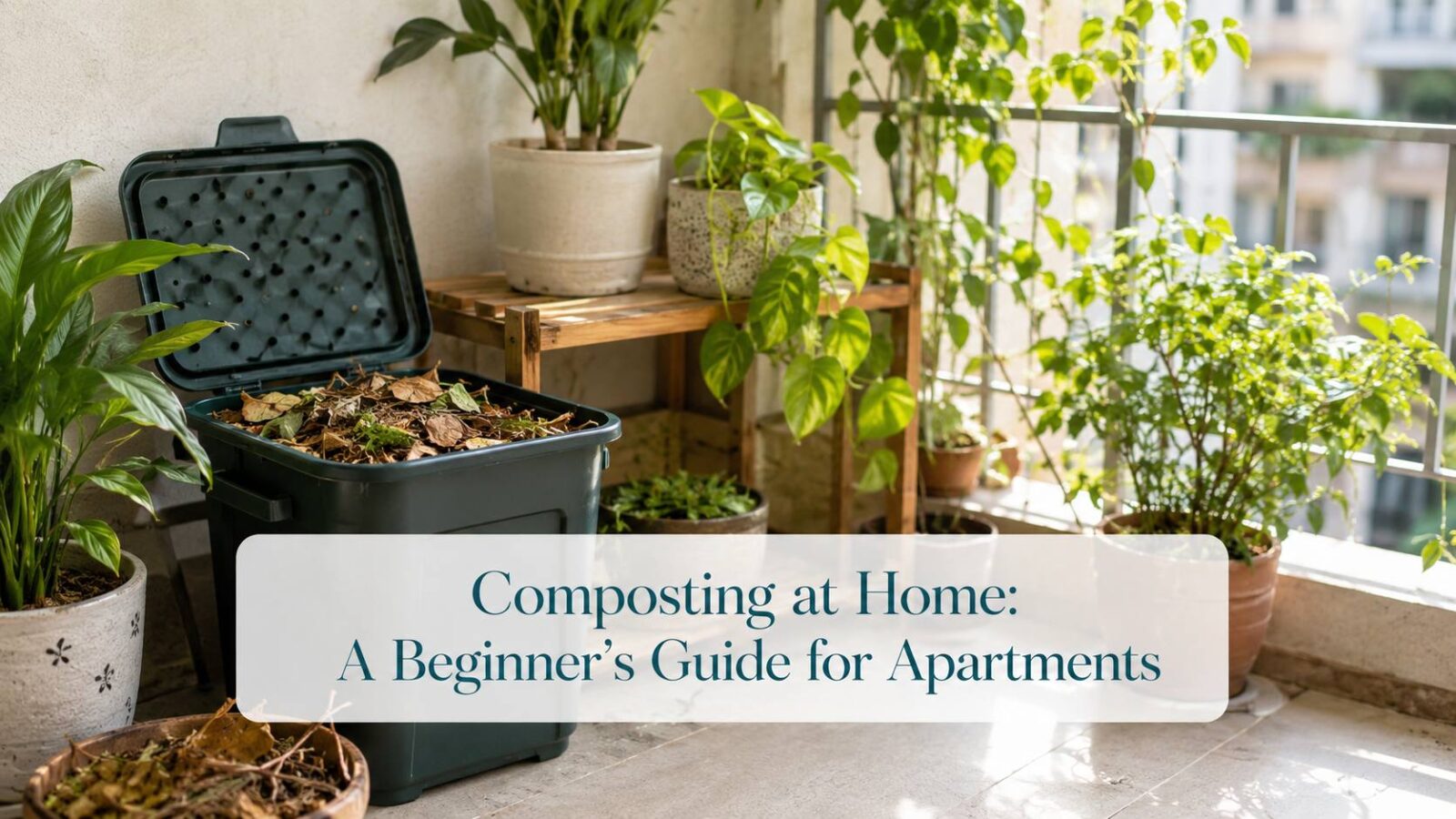
The simplest apartment method. A purpose-made tiered compost bin, or even a stack of large pots with holes, sits on a balcony and processes daily scraps. Affordable, odour-free when balanced, and ideal for most flats.
Bokashi (fermentation)
An airtight bin and a bran inoculant ferment waste, including small amounts of cooked food, with no smell, producing a pre-compost you bury or finish later. Good where space is very tight.
Vermicomposting (with worms)
Composting worms speed everything up and produce especially rich castings. It needs a little more care to keep the worms happy but rewards you with the best fertiliser of the lot.
How to start in five steps
- Pick a spot and bin. A shaded balcony corner and a tiered bin or pot stack suit most flats.
- Add a brown base. Start with a layer of dry leaves, coco peat, or shredded cardboard.
- Layer greens and browns. Add kitchen scraps, then cover each time with a larger amount of browns.
- Keep it balanced and aerated. Turn the mix every few days; if it smells, add more browns.
- Harvest in 6-10 weeks. When it looks like dark, crumbly soil and smells earthy, it is ready to use.
Using your compost
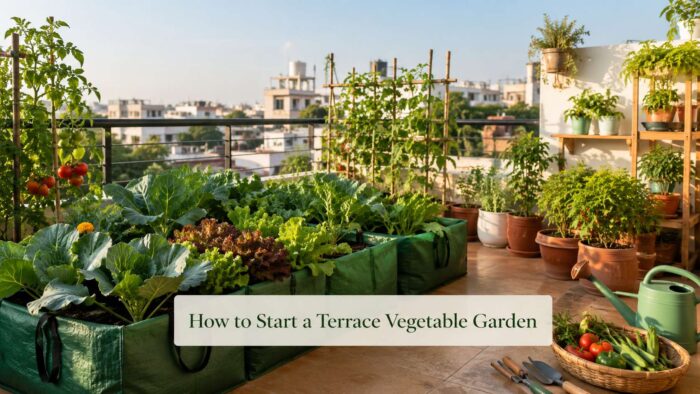
Finished compost is free fertiliser, and the obvious place for it is your own plants. Mix it into the soil of your indoor plants or, better still, feed a terrace vegetable garden, where home-grown compost closes the loop between kitchen waste and home-grown food. Composting is one of the higher-impact habits in our 25 ways to a greener home precisely because it cuts landfill waste and replaces shop-bought fertiliser at the same time.
Troubleshooting common problems
- Bad smell: too wet or too many greens; add browns and turn it.
- Flies or pests: exposed food scraps; always cover greens with browns and keep meat and dairy out.
- Not breaking down: too dry or too many browns; add greens and a little moisture.
- Too wet and soggy: add dry browns and improve drainage at the base.
No garden? You can still compost
A common worry is what to do with the finished compost if you have no garden. There are easy answers, and none should stop you starting.
- Use it for indoor plants and balcony pots, which is more than enough demand for a small household output.
- Share it with neighbours, building gardeners, or a local community garden, all of which welcome free compost.
- Donate to nearby plant nurseries or urban-farming groups that collect home compost.
- Use a bokashi system, which ferments waste compactly and can be finished or given away later.
The point of composting is keeping waste out of the landfill; finding a home for the compost is the easy part.
Common mistakes
- Adding meat, dairy, and oily food, which cause smell and pests in a home bin.
- Piling in wet scraps without enough dry browns to balance them.
- Never turning the heap, so it goes anaerobic and starts to stink.
- Letting it dry out completely, which stalls the whole process.
- Giving up after a week because it has not magically turned to soil yet.
Editor’s note
The single thing that makes or breaks apartment composting is the browns. Almost every smelly, pest-ridden compost failure comes down to too much wet kitchen waste and not enough dry material to balance it. Keep a stash of dry leaves, shredded cardboard, or coco peat next to the bin and cover every addition of scraps generously. Do that and composting is genuinely odour-free and easy. Start small, expect it to take a couple of months the first time, and you will wonder why you ever sent that waste to a landfill.
Frequently asked questions
Does home composting smell bad?
Not when balanced correctly. Smell comes from too much wet green waste and not enough dry browns, or from adding meat and dairy. Keep the right ratio, cover scraps with browns, and a home compost bin smells earthy, not foul.
Can I compost in a small apartment?
Yes. A compact tiered bin, a pot stack, or a bokashi bin fits on a balcony or in a utility corner and handles a household’s daily scraps. Apartment composting is well established and needs little space.
How long does compost take to be ready?
Usually 6-10 weeks for a balanced home bin, faster with worms or in warm weather. It is ready when it looks like dark, crumbly soil and smells earthy rather than of food.
Will composting attract rats or insects?
Not if you run it correctly. Pests are drawn to exposed food, especially meat, dairy, and oily scraps, which is exactly what you keep out of a home compost bin. Always cover fresh scraps with dry browns, keep the lid on, and never add cooked or greasy food. A balanced, covered compost smells earthy and gives pests nothing to find.
The bottom line
Composting turns a kilogram or two of daily food scraps into free fertiliser and keeps it out of the landfill, all from a corner of a flat. Balance wet greens with plenty of dry browns, choose a bin or method that suits your space, turn it occasionally, and harvest in a couple of months. Use the result on your plants or vegetables, and you close one of the most satisfying loops in a sustainable home.