A sunny terrace is one of the most underused resources a home has. With good light, even a modest terrace can grow a genuinely useful amount of vegetables, cutting grocery trips, guaranteeing chemical-free produce, and using up your home compost. The barrier is rarely space; it is knowing how to start without wasting money on the wrong things. This guide covers exactly that: what to grow first, the containers and soil that work, the watering and sun realities of a terrace, and the mistakes that kill most beginners’ gardens.
The honest promise is modest but real: a terrace will not make you self-sufficient, but it will reliably supply herbs, greens, and several vegetables, and it pairs perfectly with home composting to close the loop from kitchen waste to kitchen table.
Start with the easy, high-yield crops
Beginners succeed by growing what thrives easily and produces quickly, building confidence before tackling fussier plants.
- Leafy greens: spinach, chard, amaranth, and lettuce grow fast and are hard to kill.
- Chillies and tomatoes: productive, well-suited to warmth, and endlessly useful in the kitchen.
- Herbs: coriander, mint, basil, and chives grow in small pots and are used daily.
- Climbers and gourds: beans and gourds give high yields with a little trellis.
- Okra and aubergine: reliable warm-weather producers once established.
Containers, soil, and setup
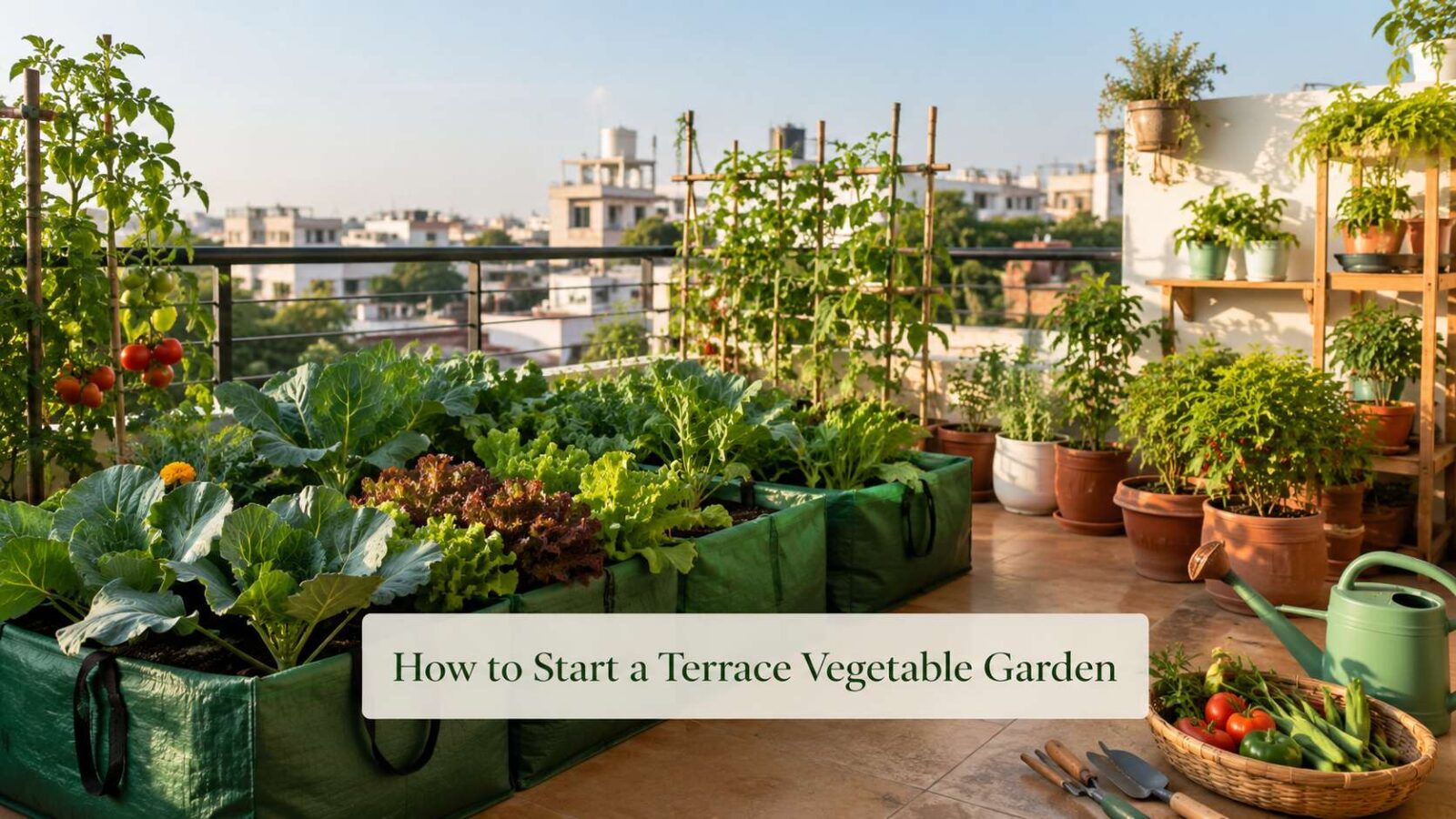
You do not need raised beds to begin. Grow bags, large pots, and recycled containers all work, provided they drain well and are deep enough for the crop’s roots.
- Use containers at least 25-30 cm deep for most vegetables, deeper for root crops.
- Ensure every container has drainage holes; waterlogged roots are the leading killer in pots.
- Fill with a light mix of soil, compost, and coco peat rather than heavy soil alone.
- Feed with your own home compost to keep the soil rich without chemical fertiliser.
- Protect the terrace surface with stands or a layer so pots do not trap water against the floor.
Sun, water, and heat
Most vegetables want six or more hours of direct sun, which a terrace usually provides easily; the bigger challenge is heat. In hot spells, pots dry out fast and strong afternoon sun can scorch tender plants. Water early morning and, in extreme heat, again in the evening, and consider light shade netting through the hottest months. Conserving water matters too, so reuse suitable household water and apply the thinking from our water-saving guide to your garden as well.
A simple first-month plan
- Week 1: set up a few grow bags or pots and prepare the soil-compost-coco peat mix.
- Week 2: sow fast greens and herbs directly, and plant chilli or tomato seedlings.
- Week 3-4: settle a watering routine, add a trellis for climbers, and start composting kitchen scraps.
- Ongoing: harvest greens and herbs as they mature, and expand only once these thrive.
Making the most of a small or shaded terrace
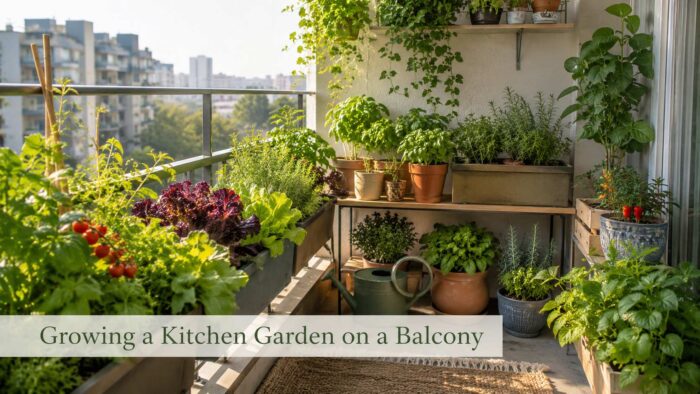
Not every terrace gets blazing all-day sun or sprawling space, and that is no reason to give up, and the same approach scales down to a balcony, as our guide to a balcony kitchen garden shows. A few adjustments keep a modest or partly shaded terrace productive.
- Grow leafy greens and herbs, which tolerate partial shade far better than fruiting crops.
- Go vertical with stacked planters, railing pots, and trellises to multiply growing area in a small footprint.
- Place sun-loving tomatoes and chillies in the brightest spots and shade-tolerant greens elsewhere.
- Use lighter containers and a good potting mix so plants thrive even in limited soil volume.
Common mistakes
- Starting with difficult crops instead of easy greens and herbs, then losing heart.
- Using containers without drainage, drowning the roots.
- Watering lightly in hot weather, so pots dry out and plants wilt.
- Planting in pure heavy soil that compacts, rather than a light, compost-rich mix.
- Expanding too fast before learning your terrace’s sun and watering rhythm.
Editor’s note
The terrace gardens that fail almost always do so for two reasons: poor drainage and inconsistent watering in the heat. Start small, with a handful of grow bags of greens and herbs you actually cook with, get the watering rhythm right, and feed everything with your own compost. A few reliable pots that you harvest from weekly will teach you more, and encourage you more, than a sprawling setup that overwhelms you in the first hot spell. Build from success, and within a season the terrace earns its place.
Frequently asked questions
What vegetables are easiest to grow on a terrace?
Leafy greens like spinach, chard, and amaranth, plus herbs such as coriander and mint, and reliable producers like chillies, tomatoes, and okra. These tolerate warmth, grow quickly, and forgive beginner mistakes.
How much sunlight does a terrace vegetable garden need?
Most vegetables need at least six hours of direct sun daily, which a terrace usually provides. The greater challenge is managing heat with timely watering and, if needed, light shade netting in the hottest months.
Do I need special soil or can I use garden soil?
Avoid using heavy garden soil alone, as it compacts in pots. A light mix of soil, compost, and coco peat drains well and stays fertile, and topping up with home compost keeps it rich without chemical fertiliser.
How long before I can harvest?
It depends on the crop. Fast leafy greens and herbs can be ready in a few weeks, while fruiting plants like tomatoes and chillies take a couple of months to begin producing. Starting with quick greens gives you an early harvest while the slower crops mature.
Do I need to worry about pests on a terrace garden?
Some pests are inevitable, but a terrace is generally easier to manage than ground-level beds. Inspect plants regularly, remove affected leaves early, encourage natural predators, and use simple remedies before reaching for chemicals. Healthy plants in good soil with proper spacing and airflow resist pests far better, so the strongest defence is keeping the plants themselves vigorous rather than chasing every insect.
Can I keep the garden going from kitchen scraps and saved seed?
Yes, and it keeps costs near zero. Regrow spring onions, herb stems, and leafy bases from cuttings placed in water or soil, let a few plants flower and save their seed for the next sowing, and take cuttings of herbs to multiply plants. Topping up pots with fresh home compost between crops keeps the soil productive, making the garden close to self-sustaining over time.
How much time does a terrace garden take to maintain?
Less than people expect, usually a few minutes most days for watering, plus occasional harvesting and a check for pests. The heaviest demand is consistent watering in hot weather, when pots dry quickly. Grouping pots, mulching, and a simple routine keep the effort low, so a modest terrace garden fits comfortably around a normal week once it is established.