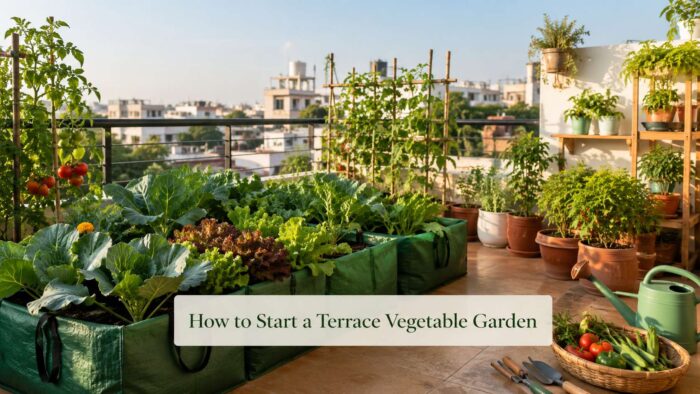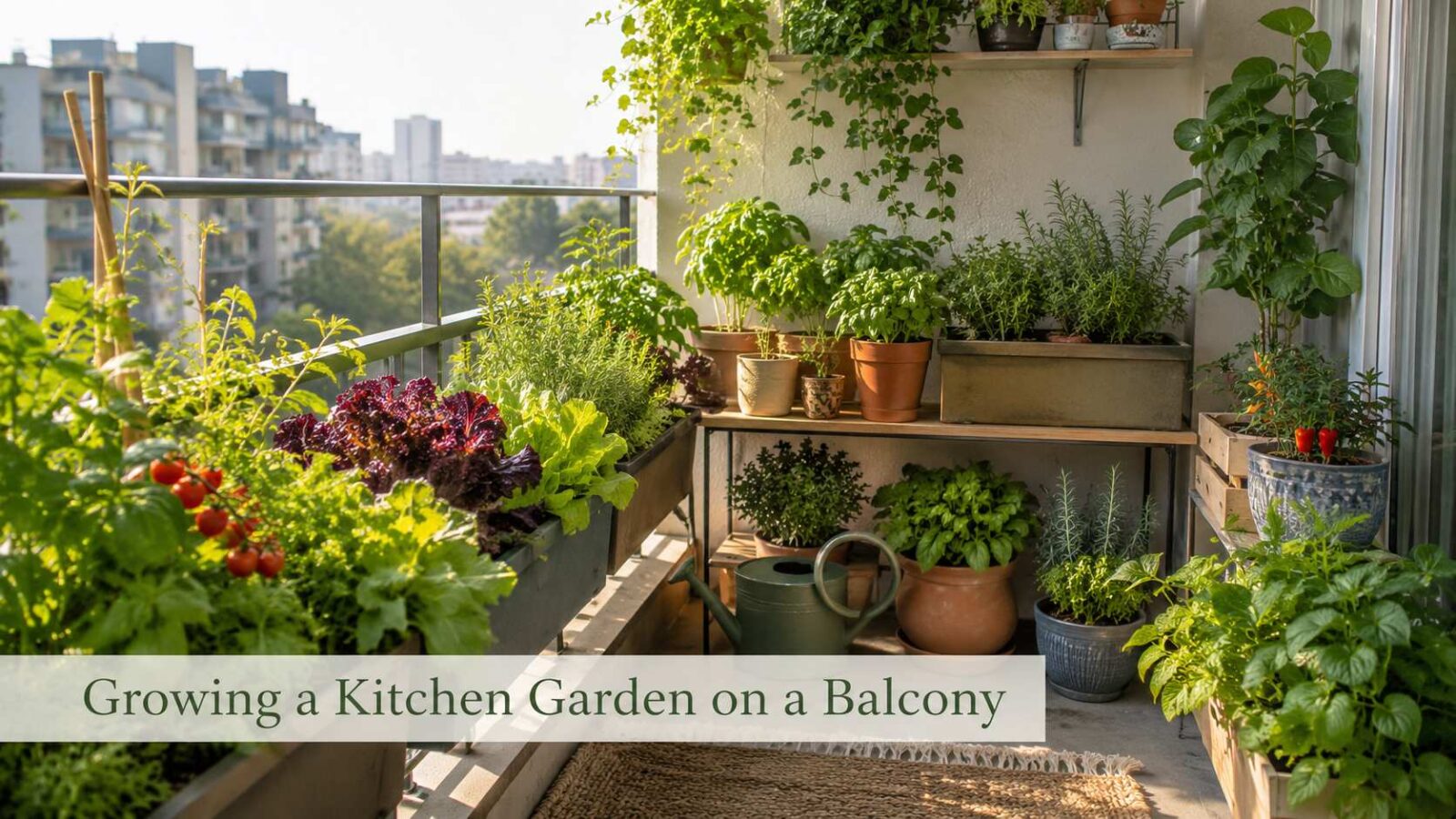
You do not need a terrace or a yard to grow your own food; a balcony, even a small or partly shaded one, can supply the herbs and greens you reach for in the kitchen every day. A few well-chosen pots of coriander, mint, chillies, and spinach turn an unused balcony into a small, productive kitchen garden that cuts grocery trips, guarantees freshness, and uses up your home compost. The constraints, limited space, variable sun, and balcony weight and drainage, are real but easily managed once you know how. This guide shows you how to set one up.
The honest expectation is that a balcony will keep you in herbs and leafy greens, with a few chillies and tomatoes as a bonus, rather than feeding the household. That is still genuinely useful, and it pairs naturally with home composting to feed the pots without buying fertiliser.
Best crops for a balcony
Choose plants that are compact, productive, and used often in cooking, so every pot earns its space.
- Herbs: coriander, mint, basil, chives, and thyme thrive in small pots and are used daily.
- Leafy greens: spinach, chard, and amaranth grow fast and tolerate partial shade.
- Chillies: compact, heavy-bearing, and perfectly suited to a sunny balcony corner.
- Spring onions and garlic greens: regrow easily from kitchen scraps for a near-endless supply.
- Cherry tomatoes: manageable in a large pot with support, given enough sun.
Working with limited space and sun
A balcony forces you to grow upward and to match plants to the light you actually have. Both are easy once you plan for them.
- Use railing planters, wall-mounted pots, and tiered stands to multiply growing area without floor space.
- Put sun-lovers like chillies and tomatoes in the brightest spot, and shade-tolerant greens and herbs elsewhere.
- Observe how many hours of direct sun your balcony really gets before choosing crops.
- Rotate pots occasionally so all sides of a plant get light on a one-sided balcony.
Pots, soil, and practicalities
Two balcony-specific issues deserve attention: weight and drainage. Wet soil is heavy, and water draining onto a neighbour’s balcony causes friction, so plan both.
- Use lightweight grow bags and plastic pots rather than heavy ceramic where weight is a concern.
- Fill with a light mix of compost, coco peat, and soil, which drains well and is not too heavy.
- Stand pots on saucers or trays so drainage water is contained, not spilling below.
- Ensure every container drains freely; waterlogging is the main killer in pots.
Watering and care
Balcony pots dry out quickly in warm weather, so consistent watering, usually morning, and evening too in peak heat, matters most. Mulching the surface and grouping pots together helps retain moisture, and reusing suitable household water, in the spirit of our water-saving upgrades guide, keeps the garden frugal. Feed regularly with home compost, watch for pests on the undersides of leaves, and harvest little and often to keep herbs and greens producing.
Keeping the garden going from scraps
A balcony garden becomes almost self-sustaining once you regrow from kitchen scraps and save your own seed, which also keeps costs near zero.
- Regrow spring onions, herb stems, and leafy bases from cut pieces placed in water or soil.
- Let a few herbs and greens flower and save the seed for the next sowing.
- Take cuttings of mint and other herbs to multiply plants without buying new ones.
- Top up pots with fresh home compost between crops to keep the soil productive.
Common mistakes
- Choosing crops that need more sun than the balcony actually gets.
- Using heavy pots and soil that strain a balcony not built for the load.
- Letting drainage water spill onto the balcony or floor below.
- Underwatering in hot weather, so small pots dry out and plants wilt.
- Cramming in too many plants, so none gets enough light or root space.
Editor’s note
Start a balcony garden with the herbs you buy most often and watch them die in the fridge, coriander and mint are perfect first crops, since a steady home supply pays off immediately and keeps you motivated. Get the watering rhythm right, grow upward to make the most of a small footprint, and feed everything with your own compost. A balcony will never replace the vegetable shop, but a few thriving pots of greens and herbs you snip fresh into every meal deliver more satisfaction, and less waste, than their small size suggests.
Frequently asked questions
Can I grow vegetables on a balcony with limited sunlight?
Yes, by matching crops to the light. Leafy greens and many herbs tolerate partial shade and will produce on a balcony with a few hours of sun, while fruiting crops like tomatoes and chillies need the brightest spot you have. Observe your actual sun before choosing.
What can I grow on a balcony in hot weather?
Heat-tolerant herbs and greens such as mint, amaranth, and chard, plus chillies, do well with consistent watering and some afternoon shade in the hottest months. Water morning and evening in peak heat, and use mulch to slow drying in small pots.
How do I stop water draining onto my neighbour’s balcony?
Stand pots on saucers or trays to catch runoff, water more gently and less at once, and ensure containers drain into their own saucers rather than over the edge. Contained drainage keeps the peace and also stops you wasting water.
How much time does a balcony garden take to maintain?
Only a few minutes most days, mainly for watering, plus occasional harvesting and a pest check. The biggest demand is consistency in the heat, when pots dry quickly. Grouping pots, mulching, and a simple routine keep the effort low, so start small and expand only once it fits easily into your day.
How many pots do I need to make a balcony garden worthwhile?
Fewer than you think. Even five or six well-chosen pots of herbs and quick greens can keep a household in fresh seasonings and salad leaves, which are exactly the items that otherwise wilt in the fridge. Start small with the crops you use most, get the watering and light right, and add pots only once those thrive. A few productive containers beat a crowded balcony of struggling plants.
The bottom line
A balcony kitchen garden is one of the easiest, most rewarding steps in a sustainable home: a handful of pots of herbs, greens, and chillies, matched to your balcony’s light, kept watered through the heat, and fed with your own compost. Mind the weight and drainage, grow upward to maximise space, and harvest often. It will not feed the family, but it will keep fresh, clean herbs and greens in arm’s reach of the kitchen every day.