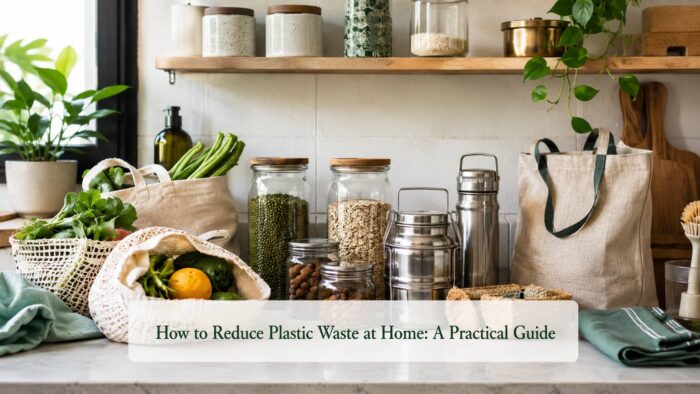
Most “eco-friendly home” lists treat a bamboo toothbrush and a solar roof as equally important steps. They are not. The impact gap between the highest and lowest items on a typical list is enormous, and pretending otherwise is how people spend money on tokens while ignoring the changes that actually matter. Below are 25 changes ranked by genuine impact for an average household, in any country. The first ten move the needle on both your running costs and your footprint. The last few are pleasant, but they will not save the planet, or your money.
The honest framing is this: a handful of decisions about energy, heating and cooling, and water account for almost all of a home’s environmental impact. Get those right first, then worry about the small stuff if you still have the appetite.
High impact (do these first)
1. Switch all bulbs to LEDs
Cuts lighting energy by 75-85%. A modern LED replaces an old incandescent at a fraction of the running cost and pays back within months. It is the single highest-return eco change in most homes, and the full maths is laid out in our comparison of LED, CFL, and smart bulbs.
2. Replace heating, cooling, and fridges that are over a decade old
Old air conditioners, heaters, and refrigerators can use nearly twice the energy of a modern variable-speed (inverter) model for the same result, and the fridge runs around the clock. Replacing the oldest units with the highest energy-efficiency rating you can find is the biggest hardware saving most homes can make.
3. Adjust the thermostat by a few degrees
Every degree of extra cooling or heating raises consumption noticeably. Nudging the thermostat a few degrees toward the outside temperature, warmer in summer, cooler in winter, is free and can cut heating or cooling energy by 20-30% with no hardware change at all.
4. Use a more efficient water heater
Water heating is one of the largest energy users in a home. A solar or heat-pump water heater, or simply insulating and timing an existing one, delivers some of the best paybacks available after lighting.
5. Consider solar (if you own the roof)
Rooftop solar typically delivers a multi-year payback followed by many years of nearly free electricity. It needs an owned roof, decent sun, and a workable arrangement to use or export the power. Whether it adds up for your home is covered honestly in our solar cost analysis.
6. Insulate the roof and the sun-facing walls
Reducing heat moving through the roof and the walls that take the most sun cuts cooling load substantially, and the same insulation keeps heat in during winter. Reflective roof treatments are cheap; proper insulation costs more but works harder.
Medium impact (worth doing)
7-12. Water, airflow, and habits
Fit tap aerators and a low-flow showerhead, use fans to reduce cooling needs, switch heavy appliances off at the wall, run the washing machine only on full loads in cold water, and service appliances yearly. None costs much, and together they trim a useful slice off utility bills. The water side is detailed in our water-saving upgrades guide.
- 7. Tap aerators and a low-flow showerhead. Cheap to fit, cut water use 25-50%.
- 8. Use fans before mechanical cooling. A fan costs a fraction of an air conditioner to run.
- 9. Switch off at the wall. Standby draw is small but constant across many devices.
- 10. Full, cold washing loads. Heating water is most of a wash’s energy.
- 11. Annual servicing. A clean filter and coil restore lost efficiency.
- 12. Lids and efficient cooking. Cutting cooking energy adds up over a year.
Lower impact (nice, not essential)
13-25. The small stuff
These are genuinely good habits, but they belong after the big items, not instead of them.
- 13-16. Reduce, reuse, repair. Buy second-hand, repair before replacing, refuse single-use plastic, carry reusable bags.
- 17-19. Compost food waste. Cuts landfill waste sharply and makes free fertiliser; see our composting guide.
- 20-22. Cloth over paper, durable over disposable. Cloth napkins, refillable bottles, longer-lasting goods.
- 23-25. Buy better, buy less. Choose durable products, avoid fast fashion, and skip gadgets you will not use.
A realistic six-month plan
- Month 1: LEDs everywhere and a smarter thermostat setting. Almost free, biggest immediate saving.
- Month 2: Tap aerators, low-flow showerhead, full cold washing loads.
- Month 3-4: Replace any decade-old air conditioner, heater, or fridge with a high-efficiency model.
- Month 5-6: Consider an efficient water heater or rooftop solar if you own the roof.
Common mistakes
- Spending on bamboo straws and tote bags while ignoring an ancient, power-hungry appliance.
- Buying a new “eco” appliance to replace one that still works well.
- Over-cooling or over-heating the home and then complaining about the bill.
- Assuming solar suits every home without checking roof ownership and sunlight.
- Treating the list as 25 equal steps rather than a ranked order of impact.
Editor’s note
If you do nothing else, switch to LEDs, ease off the thermostat, and replace any appliance over a decade old with a high-efficiency model. Those three account for most of the savings on this entire list, and the first two are essentially free. The eco-marketing industry would rather sell you a small gadget than tell you the boring truth, which is that energy, heating, and cooling are where the impact lives. Start there, and the small swaps become a pleasant bonus rather than a guilty distraction.
Frequently asked questions
What is the single most effective eco-friendly home change?
Switching to LED lighting and easing the thermostat a few degrees. Together they cut a large share of household energy at little or no cost, with LEDs paying back within months.
Are bamboo and reusable products a waste of time?
Not a waste, but a small effect compared with energy and water decisions. Do them after the high-impact items, not instead of them, and they are a sensible addition.
How much can an average household realistically save?
Households that do the high and medium-impact items typically cut energy and water use by 20-40%, with the appliance and solar steps doing most of the heavy lifting.
In what order should I make these changes?
Do the free and near-free changes first, LEDs and thermostat, then replace your oldest power-hungry appliances with efficient models, then add water and habit changes, and finally consider solar if you own the roof. Working top-down means the cheapest, highest-impact steps pay for the bigger ones later.
The bottom line
An eco-friendly home is not built from 25 equal swaps; it is built from a few decisions about energy, heating and cooling, and water, followed by sensible habits. Do the high-impact items first, choose appliances by their efficiency rating, and treat the small stuff as the finishing touch. Done in that order, going green saves real money rather than just easing your conscience.