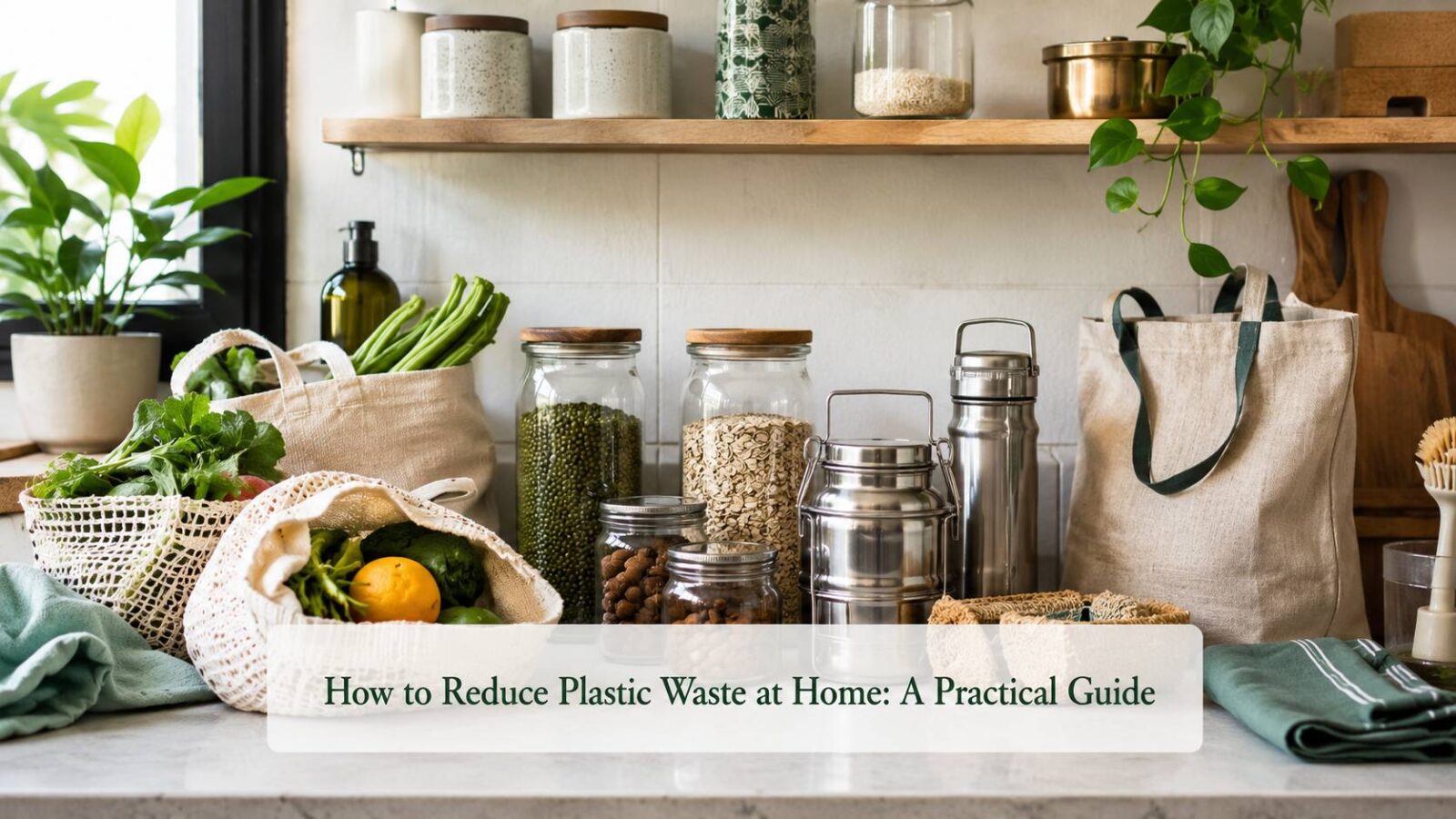
A large share of a household’s plastic waste leaves the home one bag, bottle, and wrapper at a time. Cutting it is genuinely worthwhile, but only if you focus on the steady, daily sources rather than the occasional ones. Most “go plastic-free” advice mixes high-impact habits with feel-good tokens, leaving people exhausted and discouraged. This guide ranks the changes by how much plastic they actually remove from your life, with realistic, affordable swaps. Start at the top, and the rest becomes easy.
The honest principle is to attack the plastic you throw away most often. A reusable that replaces a daily disposable does real, repeated good; a one-time “eco” purchase you barely use does almost nothing.
The big sources (tackle these first)
1. Carry bags
The single most visible household plastic. Keeping a few sturdy cloth bags by the door, and a foldable one in your bag or car, eliminates a relentless stream of thin plastic bags. It costs almost nothing and is the highest-impact habit on this list, anchoring the everyday swaps in our guide to a greener home.
2. Water and beverage bottles
A good reusable bottle carried daily replaces a constant flow of single-use plastic bottles. At home, a filter ends the need to buy packaged water at all. This is one swap that quickly pays for itself.
3. Kitchen packaging and storage
Cling film and disposable containers are easily replaced by steel or glass containers, beeswax wraps, and reusable lids. Buying staples like grains and pulses loose or in bulk, where shops allow, avoids a great deal of packaging.
The single-use packaging problem
A surprising amount of household plastic comes from small, multilayer packets, sauces, snacks, single-serve everything, which are nearly impossible to recycle.
- Buy larger sizes and refill packs instead of single-serve packets wherever possible; the cost per use is usually lower too.
- Choose bar soap and shampoo bars, which skip plastic packaging entirely.
- Prefer brands offering genuine refills for personal-care and household products.
- Cook more from basic ingredients to cut down on individually packaged processed foods.
Swaps in the bathroom
- Bar soap and shampoo bars in place of plastic bottles.
- Bamboo or wooden toothbrushes, a small but easy switch.
- Refillable dispensers for handwash rather than buying new pump bottles each time.
- A safety razor instead of disposable plastic razors, cheaper over time and long-lasting.
Dealing with the plastic you cannot avoid
Some plastic is unavoidable, so handle it well. Separate clean recyclables so they actually reach recyclers, hand sorted plastic to your local collection or recycler, and keep food waste separate for composting so it does not contaminate recyclables. Clean, separated plastic has a real chance of being recycled; mixed, food-soiled waste almost none.
What about e-waste and other tricky items?
Some household waste is neither ordinary recycling nor compost, and it needs separate handling. Old electronics, batteries, and certain bulbs should never go in the general bin, where they leak hazardous material into landfill.
- Save e-waste, dead gadgets, cables, chargers, for authorised e-waste collectors or brand take-back programmes.
- Drop used batteries and old fluorescent tubes at designated collection points rather than the household bin.
- Return expired medicines to a pharmacy or approved disposal scheme where available.
- Pass on working but unwanted items, giving them a second life is better than any recycling.
Common mistakes
- Buying a cupboard full of “eco” containers while still taking plastic bags at every shop.
- Focusing on rare items like straws while ignoring daily bags, bottles, and packets.
- Throwing recyclable and food waste together, so neither can be processed.
- Assuming “recyclable” packaging will be recycled, when much of it never is.
- Trying to go fully plastic-free overnight, then giving up entirely.
Editor’s note
If you do just one thing, never leave home without a cloth bag, and add a reusable water bottle to that. Between them, bags and bottles account for an enormous share of everyday household plastic, and both habits cost almost nothing once they stick. The bathroom and kitchen swaps follow naturally once you stop treating disposables as the default. Do not aim for a perfect plastic-free home in a week; aim to remove the biggest, most frequent sources first, and let the smaller swaps accumulate at their own pace.
Frequently asked questions
What is the biggest source of plastic waste in an average home?
Single-use carry bags, beverage bottles, and food packaging, including small multilayer packets. These daily disposables far outweigh occasional items like straws, so tackling them first removes the most plastic.
Are bioplastics and “compostable” plastics a good alternative?
Often not, because most compostable plastics need industrial facilities that few areas have, so they end up in landfill like ordinary plastic. A reusable item is almost always the better choice than any single-use alternative.
How do I make sure my plastic actually gets recycled?
Separate clean recyclables from food waste, rinse off residue, and use your local recycling collection or drop-off. Clean, separated plastic is far more likely to be recycled than mixed, soiled waste.
Does refusing plastic bags really make a difference?
Yes, because the effect compounds. A household that takes several plastic bags a week through years of shopping accounts for thousands of bags over time, all of which a couple of cloth bags would prevent. Individually each bag seems trivial, which is exactly why the habit is so easy to overlook, but the cumulative volume kept out of the waste stream is large, and it is the cheapest swap there is.
Are paper or cloth bags better than plastic?
A durable cloth bag you reuse many times is the clear winner, because the impact of any bag is dominated by how often it is reused rather than what it is made of. Single-use paper is easier to recycle than plastic but takes more energy and water to make and tears easily, so it is not a clean win. Keep a few sturdy cloth bags in regular rotation and the question largely answers itself.
What is the most overlooked plastic in the home?
Small, single-serve packaging, the sachets, pouches, and individually wrapped items that pile up almost invisibly. Because each is tiny, people ignore them, yet together they often outweigh the obvious bottles and bags. Buying larger sizes, refills, and loose staples instead of single-serve formats removes a surprising amount of plastic that most plastic-reduction efforts never address.
Is it realistic to go completely plastic-free?
For most households, no, and chasing perfection tends to cause burnout. A more realistic and durable goal is to remove the biggest, most frequent sources of plastic, bags, bottles, and packaging, and accept that some plastic will remain. Handling that unavoidable plastic well, by keeping it clean and separated for recycling, matters more than agonising over the last few items you cannot easily replace.