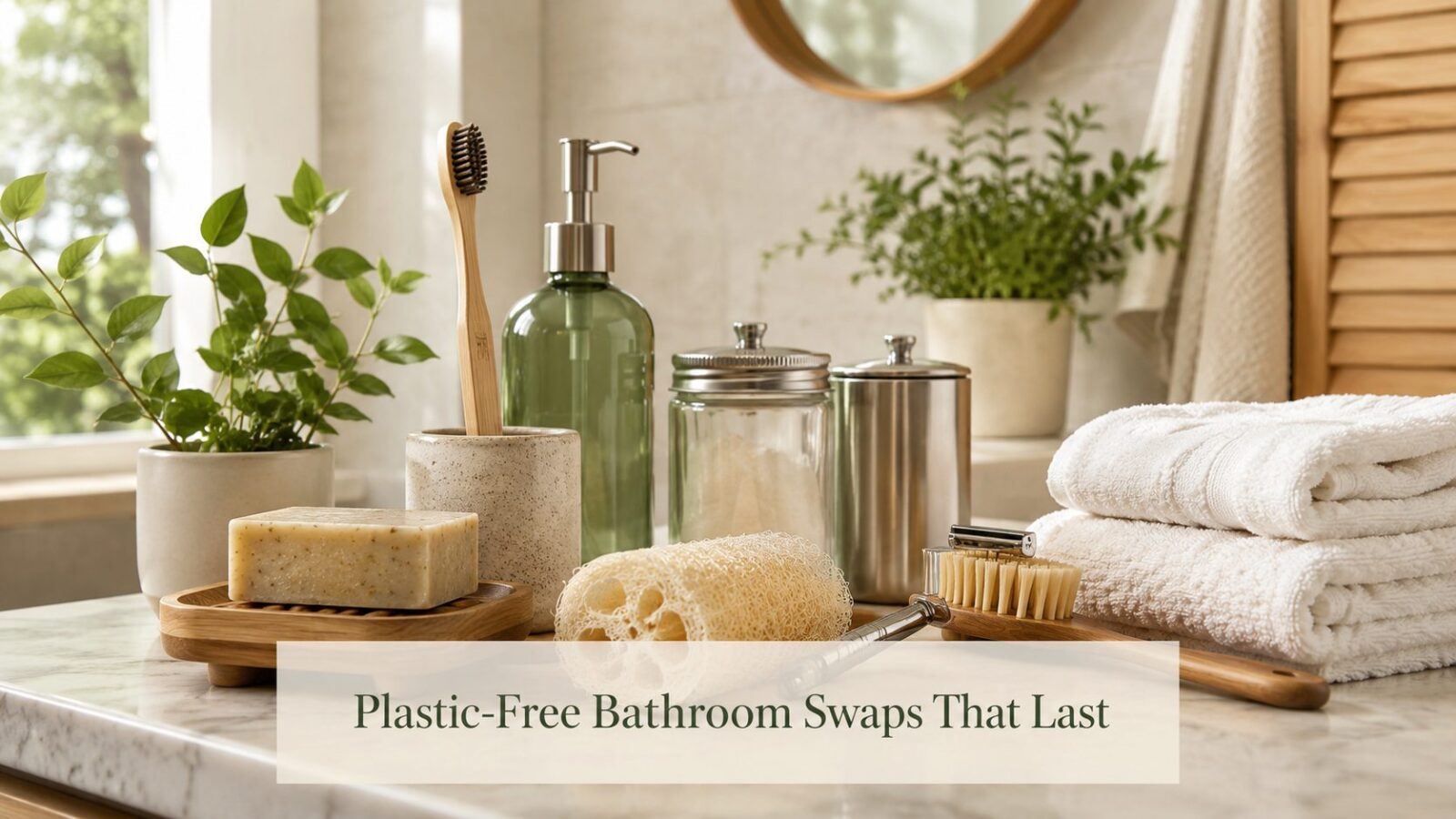
The bathroom is one of the quietest sources of single-use plastic in a home, a steady stream of bottles, disposable razors, and packaging that empties into the bin without anyone really noticing. It is also full of greenwashing, with premium “eco” versions of things you do not need. The swaps worth making are the ones that replace something you use and discard often with a durable, longer-lasting alternative. This guide ranks the bathroom swaps that genuinely cut waste and cost over time, and flags the ones that are mostly marketing, so your bathroom gets greener without getting more expensive.
The guiding test, as in our wider sustainable products guide, is frequency: a swap that replaces a daily disposable does real, repeated good, while a single-use “eco” novelty mostly just feels virtuous. Apply that test and the worthwhile swaps become obvious.
The high-value swaps
Bar soap and shampoo bars
The biggest single source of bathroom plastic is bottles, and bars retire them entirely. A good shampoo or soap bar lasts a long time, travels well, and arrives in little or no packaging. For most people this is the highest-impact swap in the room.
A safety razor
Disposable plastic razors and cartridges are bought and binned endlessly. A durable metal safety razor lasts for years, uses inexpensive recyclable blades, and works as well or better. It costs more upfront and saves steadily afterwards.
Refillable dispensers
For products that do come as liquids, a refillable dispenser topped up from a larger container or a refill station cuts the parade of new pump bottles, the same logic that drives our advice on reducing plastic waste at home.
Everyday essentials worth switching
- Bamboo or wooden toothbrushes in place of all-plastic ones, a small but frequent swap.
- Reusable cotton rounds and cloths instead of single-use pads and wipes.
- Toothpaste tablets or refillable options where they suit you, cutting tube waste.
- A durable soap dish and containers so bars and refills have a proper home.
Materials that last
Durability is the real sustainability story in the bathroom, just as it is in the kitchen, covered in our sustainable kitchen swaps guide. Choosing items built to last means buying once rather than repeatedly.
- Stainless steel and glass over flimsy plastic for dispensers, cups, and holders.
- Natural-bristle or replaceable-head brushes over throwaway plastic ones.
- Quality towels and bath linen that last years rather than cheap ones that wear out fast.
- Repairable or refillable items over sealed, disposable designs.
Swaps not worth the money
- Premium “eco” versions of items you already own and that still work perfectly well.
- Single-use “compostable” products that need industrial composting most areas lack.
- Novelty zero-waste kits that bundle a few useful items with several you will never use.
- Expensive natural-fibre everything, when a durable item you keep for years is greener regardless.
Common mistakes
- Buying a shelf of eco products while still binning bottles and disposable razors.
- Replacing working items just to own “sustainable” versions, creating waste in the process.
- Focusing on rare items while ignoring the daily bottles, razors, and pads.
- Trusting “natural” labels instead of looking at what something is actually made of.
- Choosing compostable disposables that cannot be composted where you live.
Editor’s note
The most sustainable bathroom is not the one with the most eco gadgets; it is the one where bottles and disposables have been replaced with a few durable things used until they wear out. Start with the daily disposables, the bottles, the throwaway razor, the plastic toothbrush, since swapping those removes the most waste for the least money. Lean on simple, durable materials like steel, glass, and good linen, and ignore the novelty kits. A handful of long-lasting swaps and the habit of refilling do the real work, and they cost less over time than the stream of disposables they replace.
Frequently asked questions
What is the easiest plastic-free bathroom swap to start with?
Switching from bottled shampoo and body wash to bars, and from disposable razors to a durable safety razor. These replace the most frequently discarded plastic in the room, last far longer, and quickly pay back their slightly higher upfront cost.
Are shampoo bars as good as bottled shampoo?
For most people, yes, once you find one that suits your hair, which can take a try or two. They last a long time, travel easily, and skip the plastic bottle entirely. If a bar does not suit you, a refillable dispenser topped up from a larger container is a good alternative.
Are compostable bathroom products a good swap?
Usually only if they can actually be composted where you live, which often they cannot, since many need industrial facilities most areas lack. A durable, reusable item is almost always a better choice than any single-use alternative, compostable or not.
How do I avoid wasting money on greenwashed products?
Focus on durability and frequency rather than labels. Ask whether an item replaces something disposable you use often and whether it is built to last; if it does both, it is worth it. Ignore vague “natural” or “eco” claims with nothing specific behind them, and never replace something that still works just to buy a greener-looking version.
Are shampoo and soap bars more economical than bottles?
Usually yes over time. A good bar lasts a long time and skips the packaging and water you pay for in a bottle, so the cost per use often works out lower despite a higher sticker price. The main adjustment is finding a bar that suits you, after which most people find bars both cheaper and less wasteful than the bottles they replace.
How do I store bars and refills so they last?
Keep soap and shampoo bars on a draining dish away from direct water spray so they dry between uses, which makes them last far longer. Store refills and spare bars somewhere cool and dry. A little care here is the difference between a bar that lasts weeks and one that turns to mush, and it is what makes the swap genuinely economical.
Where should I start if I want a plastic-free bathroom?
Begin with the items you replace most often: switch bottled shampoo and body wash to bars, swap a disposable razor for a durable safety razor, and move handwash to a refillable dispenser. These three changes remove the bulk of the bathroom’s single-use plastic while saving money over time. Once they are habits, add the smaller swaps like a bamboo toothbrush and reusable cloths at your own pace, rather than buying everything at once.
The bottom line
A plastic-free bathroom is built from a few durable swaps, not a shelf of eco products. Start with the items you discard most often, bottled shampoo and body wash, disposable razors, plastic toothbrushes, and replace them with bars, a safety razor, and longer-lasting alternatives. Lean on simple, durable materials like steel and glass, refill rather than rebuy, and ignore novelty kits and vague “natural” labels. Done this way, the bathroom gets steadily greener and cheaper at the same time, because each swap retires a stream of single-use plastic for good.